Mold Remediation in New York City
Over ten square feet, New York State law requires a licensed assessor and a separate licensed remediation contractor, and the work runs in that order.
Mold remediation in New York City is governed by a state law that most homeowners have never heard of until they need it. NYS Labor Law Article 32 says that any mold assessment, remediation or abatement of an area greater than ten square feet is a licensed project, that the assessor and the remediation contractor must be separately licensed by the State Department of Labor, and that the same company cannot do both jobs on the same property. The contractors we dispatch for remediation hold the NYS Mold Remediation Contractor license, and the assessment before the work and the clearance after it are done by an independent licensed Mold Assessor.
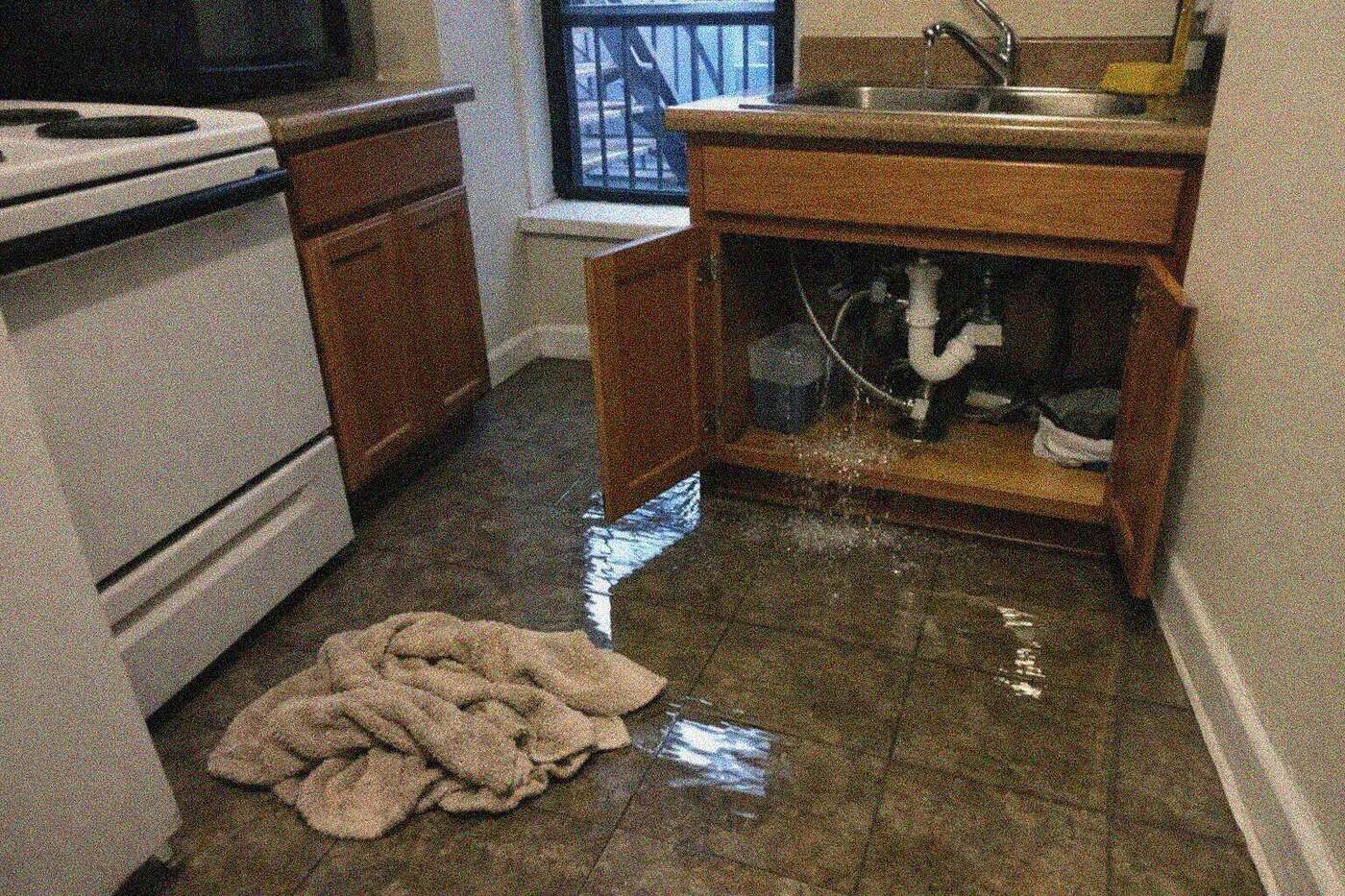
Mold in a New York apartment is almost always a water problem first. The EPA puts growth on wet drywall, plaster paper or wood at 24 to 48 hours, and a ceiling leak from the apartment above or a slow riser drip behind plaster gives it exactly that. The remediation is only as good as the drying and the leak repair behind it, so the plan covers the source and the moisture as well as the removal, and the clearance assessment at the end is what says the job is finished.
What Article 32 Requires, in Plain Language
Above ten square feet, two licensed parties, two documents, and a wall between them.
Article 32 of the New York State Labor Law has been in force since 2016 and creates three license types issued by the Department of Labor: Mold Assessor, Mold Remediation Contractor and Mold Abatement Worker, with a supervisor license for the people running the crew. A project under the law is assessment, remediation or abatement of mold covering more than ten square feet. Below that threshold the law does not apply, and a small patch on a bathroom ceiling can be cleaned by anyone; above it, every step is licensed.
The order the law sets out is fixed. A licensed Mold Assessor inspects, determines the extent and the cause, and writes a mold remediation work plan stating what has to be removed, how it is to be contained and what the clearance criteria are. A licensed Mold Remediation Contractor carries out that plan and nothing beyond it without the assessor revising the plan. When the work is done the assessor comes back for a post-remediation assessment and issues a clearance report saying the plan was met. The building owner or the resident ends up holding three documents: the work plan, the remediation contractor's completion record and the clearance.
Section 936 is the part that stops the trade from marking its own homework: no licensee may perform both the mold assessment and the mold remediation on the same property, and nobody may hold an ownership interest in both the assessor and the remediation contractor on the same job. A company that offers to test your apartment, remediate it and then clear it is offering something the law forbids above ten square feet. The exemptions in section 933 cover owners working on their own property, owners of buildings of four or fewer units, in-house staff of larger owners on their own buildings, and government agencies. Everyone else follows the licensed route.
Both licenses can be checked by name on the State's open data portal at data.ny.gov by searching for mold, which lists every licensed assessor and remediation contractor in the state. Ask whoever attends for the license number, look it up, and ask the assessor for theirs separately.
The New York City Layer: HPD, Local Law 55 and the Scale of the Problem
On top of the state law, the City treats mold in rental housing as a housing code matter. A tenant reports mold to the landlord and then to 311, and HPD sends a code enforcement inspector who can issue a violation. Under Local Law 55 of 2018, the Asthma-Free Housing Act, owners of buildings with three or more units must inspect for indoor mold and leaks at least annually and when a tenant complains, and must remediate mold hazards in a way that follows the City's work practices, with the larger jobs following Article 32. A violation for mold of thirty square feet or more falls in the immediately hazardous class with a short correction window. For Class B and C mold violations in buildings of ten or more units, the certification of correction has to include the state paperwork and a Department of Environmental Protection air-pollution filing. Property managers know this; tenants often do not, and it is the lever that gets a slow landlord moving.
The scale of leak-driven mold in the city is visible in its public housing. City Limits reported in February 2025, citing the federal monitor's December 2024 report, that NYCHA had about 77,000 open work orders for mold and leaks as of April 2024, and that the authority met its own five-day mold removal standard nine percent of the time between February and October of that year. NYCHA does its own remediation, so those tenants are outside what any private contractor can do, but the number says how ordinary it is in this city for a leak to become a mold problem before it is fixed.
Containment, Negative Air and HEPA: How the Work Is Done
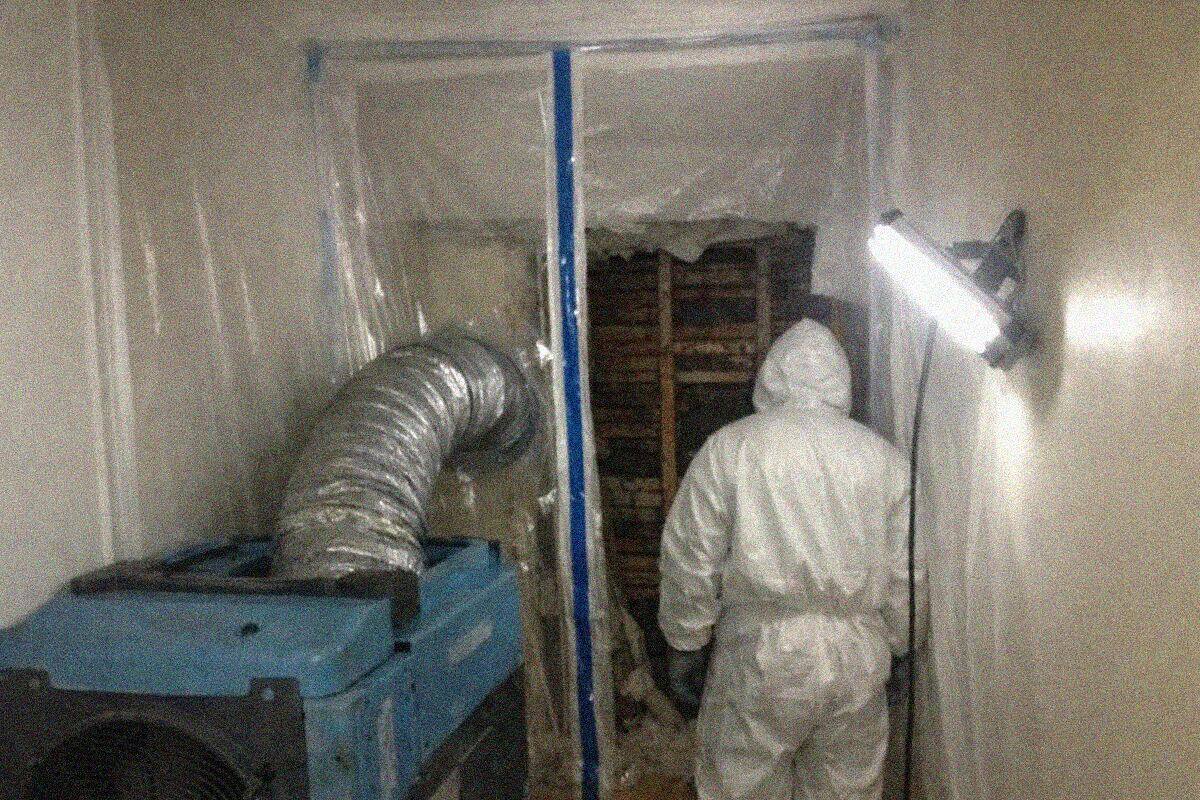
Remediation above the threshold runs inside a containment. The affected rooms are sealed with plastic sheeting, an air scrubber with a HEPA filter is ducted out of a window or into the corridor under negative pressure so the air inside the containment is pulled out of the apartment and filtered rather than pushed into the rest of it, and the crew works in protective equipment through a zipped entry. Porous material with growth on it, which in an apartment means drywall, plaster paper facing, insulation, carpet and the back of cabinets, is bagged inside the containment and carried out sealed. Framing, lath and masonry that stay are cleaned, HEPA vacuumed and treated, then dried.
The removal is sized to the work plan. If the assessor wrote two feet of drywall above the wet line, that is what comes out, and if the contractor finds growth beyond it the assessor is called to revise the plan before the cut moves. After the removal and cleaning, the containment stays up until the assessor has done the post-remediation assessment, which usually includes a visual inspection and may include air or surface sampling depending on the plan. Only after clearance does the drywall go back, because closing the wall before clearance is the way growth returns behind new paint.
- Source and moisture fixed first: the leak repaired and the material dried to a measured standard, or the mold comes back
- Full containment with negative air and HEPA filtration, and a sealed path for bagged material through the apartment and the building
- Removal of porous material exactly to the work plan, with the assessor revising the plan if more is found
- HEPA vacuuming and cleaning of what stays, followed by drying
- Post-remediation assessment by the independent assessor before any rebuild starts
Below Ten Square Feet, and Why It Still Matters
A patch smaller than ten square feet, roughly a three-foot square, is outside the licensing law, and a bathroom ceiling corner or a strip along a window sill can be cleaned with detergent, dried and repainted with a mold-resistant primer. The catch is that the visible patch is often the smallest part of the problem. Growth on the back of a plaster wall, inside a wall cavity or under a floor is measured when it is opened up, and a small stain on the paint over a wet wall is regularly a licensed project once the wall is open. When the cause is a leak that has been running for weeks, the moisture survey comes first, and the size of the project is decided from what the meters find, with the assessor brought in the moment it looks like it will cross the line.
What Drives the Cost of Mold Remediation in New York
Mold remediation has three cost lines that arrive from two different parties: the assessor's inspection and clearance, the remediation contractor's containment, removal and cleaning, and the rebuild that follows, which is a separate trade again. Because the assessor and the remediator are separate under Article 32, there is no single number, and any figure offered before the assessor has written the work plan is a guess. The water side of the job follows the same drivers as any drying: published 2026 national cost surveys from Angi and HomeGuide put water damage mitigation at about 3.75 to 7.50 dollars per square foot of affected area, with New York at or above the top, and the mold work sits on top of that.
- Square footage of growth, and whether it is on the surface or inside a cavity that has to be opened
- Material: drywall is cut and bagged, plaster on lath is heavier and slower to remove, block and framing are cleaned in place
- Containment size and the route out: a containment across a whole studio costs more than one around a bathroom, and bagged material in a walk-up goes down the stairs
- Whether sampling is in the work plan, since air or surface samples add laboratory cost to the assessor's side
- The leak repair and drying that have to precede the removal, including any plumbing by a Licensed Master Plumber
- The rebuild afterwards, which in pre-1978 housing involves EPA Lead-Safe work practices for disturbed paint
- Building requirements: certificate of insurance, freight elevator windows, a super to admit the crew daily, and DEP filings on a violation job in a ten-plus unit building
A written work plan from the assessor and a written price from the remediation contractor against that plan, both before any containment goes up, are the two documents that keep the final invoice from being a surprise.
Building Logistics for Mold Remediation in an Apartment
Containment and negative air need a window or a corridor to exhaust to, power for the scrubber and the dehumidifier, and a route for sealed bags from the apartment to the street that does not go through the lobby at rush hour. The managing agent will ask for a certificate of insurance and the remediation contractor's license number before the plastic goes up, and a board will often want the assessor's work plan too. Tell the super on the first call; the freight elevator and the disposal route are theirs to arrange.
Neighbors notice mold work. A negative air machine venting into a corridor and a crew in suits carrying bags through the hall produce questions, and a short note from management about what is being done, on what days, keeps the hall calm. Where the leak that caused the growth came from another apartment or a building riser, the same report that started the remediation is the one the board uses to decide who is paying for it.
Signs You Have Mold Behind the Finish
The stain you can see is rarely the whole of it.
A musty smell in one room that will not air out
Growth inside a wall cavity, behind a cabinet or under a floor produces the smell weeks before anything is visible on the paint, and the smell is strongest on humid days.
Spotting on a ceiling under a past leak
A ceiling that was wet from the apartment above and repainted without being dried grows black spotting through the new paint, and the growth on the plaster paper behind is larger than the spots.
Bubbling or peeling paint along the base of a wall
Water wicking up plaster or drywall from a floor leak leaves the base of the wall wet for weeks, and that band is where growth starts.
A stain over ten square feet, or any stain inside a wall
That is the threshold at which Article 32 applies and a licensed assessor has to write the plan before anyone touches it.
Symptoms that ease when you leave the apartment
Coughing, wheezing or irritated eyes that improve at work or on holiday and return at home are a reason to have the apartment inspected, and under Local Law 55 a landlord of a three-plus unit building has to respond to a mold complaint.
How a Mold Remediation Call Runs in New York
Call, and describe the water history
A person answers at any hour. Say where the growth is, how large it looks, and what leaked and when, because the water is the cause and it has to be fixed first.
Moisture survey and, above ten square feet, an independent assessor
The wet extent is mapped, the source is found, and if the project is over the threshold a licensed Mold Assessor who is separate from the remediation contractor inspects and writes the work plan.
Written plan, written price, building paperwork
You get the assessor's work plan and the remediation contractor's price against it. Certificate of insurance and license numbers go to management before any containment is built.
Containment, removal, cleaning and drying
The rooms are sealed under negative air with HEPA filtration, porous material is removed to the plan and bagged, what stays is cleaned and dried, and the log records each day.
Clearance, then rebuild
The assessor returns for the post-remediation assessment and issues clearance. Only then does the drywall, plaster and paint go back, with the handoff to the repair contractor agreed in writing.
Water in the Apartment Right Now?
Tell us what has happened and where, and we will get the response moving. If water is still coming in, find the shutoff or call the super first.
The phone is picked up 24 hours a day, seven days a week, on every holiday in the year.
Why New Yorkers Call This Number
Assessor and Remediator Kept Separate, as Section 936 Requires
The contractors we dispatch for remediation hold the NYS Mold Remediation Contractor license, and the assessment before and the clearance after are done by an independent licensed Mold Assessor, both checkable by name on data.ny.gov.
Nothing Closes Until Clearance Is in Writing
The containment stays up and the wall stays open until the assessor's post-remediation assessment says the work plan was met, because drywall hung before clearance is how growth comes back behind fresh paint.
The Leak Is Fixed and the Wall Is Dried First
Mold on wet material starts in 24 to 48 hours according to the EPA, and a remediation done over a live leak or a wet wall is a remediation done twice, so the source repair and a measured dry standard precede the removal.
A typical mold remediation call in Flatbush
The situation: a tenant in a six-story 1930s rental building whose bedroom ceiling had leaked from the bathroom above twice in a year, been repainted by the building's handyman both times, and now showed black spotting across a patch the size of a door. The landlord had said it was condensation from drying laundry.
What gets done: the moisture survey found the plaster ceiling still wet at the center and the patch, once the paper facing and the loose plaster were measured, well over ten square feet, so an independent licensed Mold Assessor inspected and wrote the work plan while the super arranged for a plumber to reseal the upstairs tub drain. The bedroom was contained with negative air ducted out of the window, the affected ceiling area was removed to the plan and bagged, the lath was cleaned and dried to a measured standard, and the assessor returned for the post-remediation assessment before any plaster went back. The tenant had filed with 311 in the meantime and HPD had an open inspection on the apartment.
The result: the clearance report, the work plan and the remediation contractor's record give the landlord what the certification of correction needs, the ceiling is rebuilt over dry lath instead of painted over wet plaster a third time, and the tenant has the documents to show the source was a plumbing leak and that it was fixed.
Before you let anyone open a wall
A short checklist for hiring a water damage contractor in New York City: the licenses to look up, the warning signs, and the four documents to ask for on any job.
Questions New Yorkers Ask
How quickly can mold remediation start?
The phone is answered 24 hours a day, every day of the year, and the moisture survey and the leak repair can start from the call. Above ten square feet the law puts an independent assessor and a written work plan before the removal, and that is the step that sets the start date. Fixing the water and drying the wall are underway in the meantime.
Can the same company test the mold and remove it?
Above ten square feet, no. Section 936 of NYS Labor Law Article 32 forbids any licensee from doing both the assessment and the remediation on the same property, and forbids anyone from owning a piece of both. An offer to test, remediate and clear your apartment in one contract is an offer to break that rule.
How do I check the licenses?
Search for mold on data.ny.gov, the State's open data portal, which lists every licensed Mold Assessor and Mold Remediation Contractor with their license numbers. Ask whoever attends for the number before the work is priced, and ask the assessor for theirs separately.
I rent. Is mold my landlord's problem?
Yes, where the cause is the building or a leak. The landlord owes the warranty of habitability and Housing Maintenance Code compliance, Local Law 55 requires owners of three-plus unit buildings to inspect for and remediate mold, and a 311 complaint brings an HPD inspector who can issue a violation with a correction deadline. A remediation done privately still needs the landlord's consent and the licensed route above the threshold.
Why does the drying come before the mold removal?
Because mold grows on wet material in 24 to 48 hours according to the EPA, and removing growth from a wall that is still wet from a leak that is still running grows it back before the paint is dry. The source repair and a measured dry standard are the first two steps in every plan.
Does mold come back after remediation?
It comes back when the water does. The national review record for the large restoration brands includes mold returning after sign-off, and the pattern behind it is closing a wall over material that was never dried or over a leak that was never fixed. The independent clearance, taken before the wall closes, and the dry-out record are what stop that.
Related Services
Ceiling Leak Water Damage
The stain that came from the apartment upstairs, and the plaster ceiling that is starting to sag under it.
Read more →Structural Drying and Dehumidification
Air movers and dehumidifiers sized to the room, with readings taken daily until the plaster and joists are dry.
Read more →Apartment and Co-op Water Damage
Leaks that cross unit lines, and sorting out who is responsible for what under a proprietary lease or condo bylaws.
Read more →All 14 services are listed on the services page. How the process runs end to end is on the home page, and the about page explains what to expect from whoever attends.