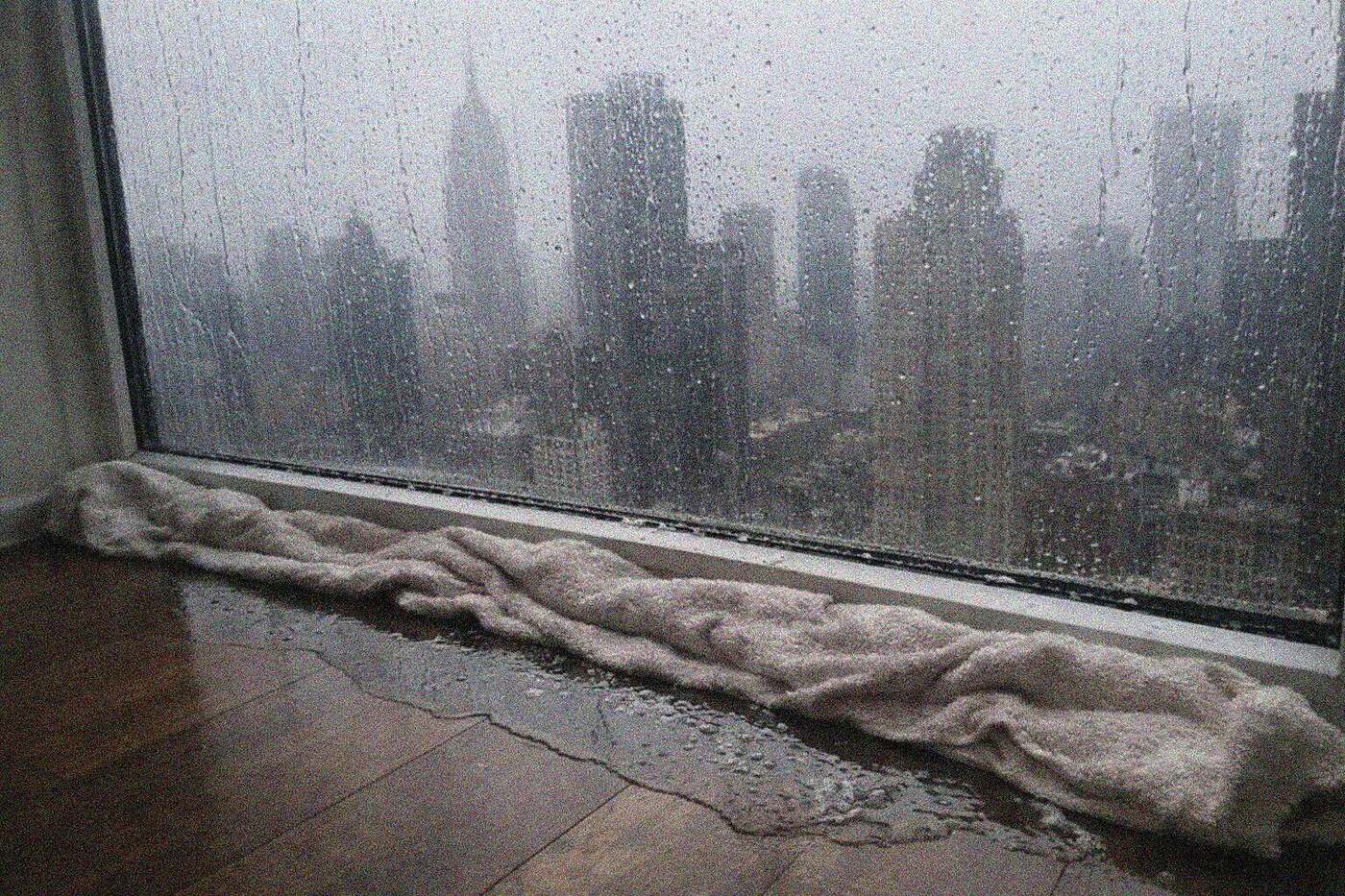
Apartment and Co-op Water Damage in New York City
When the water came from someone else's apartment, who fixes it, who pays and what the board needs before anyone starts.
Water damage in a New York apartment is a question of responsibility before it is a question of drying, because the water almost always came from somewhere you do not control: the unit above, a shared riser, a roof, a facade. Who repairs what and who pays for it depends on whether you rent, own shares in a co-op or own a condo unit, and each has its own rules. The 2023 Housing and Vacancy Survey, as published by the Citizens Housing and Planning Council, puts 62 percent of the city's homes in buildings of six or more units, so this is the ordinary case here.
The practical order is the same in all three: stop the water, tell the super, document everything, get the apartment dried before mold starts, and let the paperwork follow the evidence. The contractor we dispatch produces the moisture map, the source finding and the daily drying log in a form that a landlord, a managing agent, a board and two insurance carriers can each use, because in this city the same leak is usually somebody else's claim as well as yours.
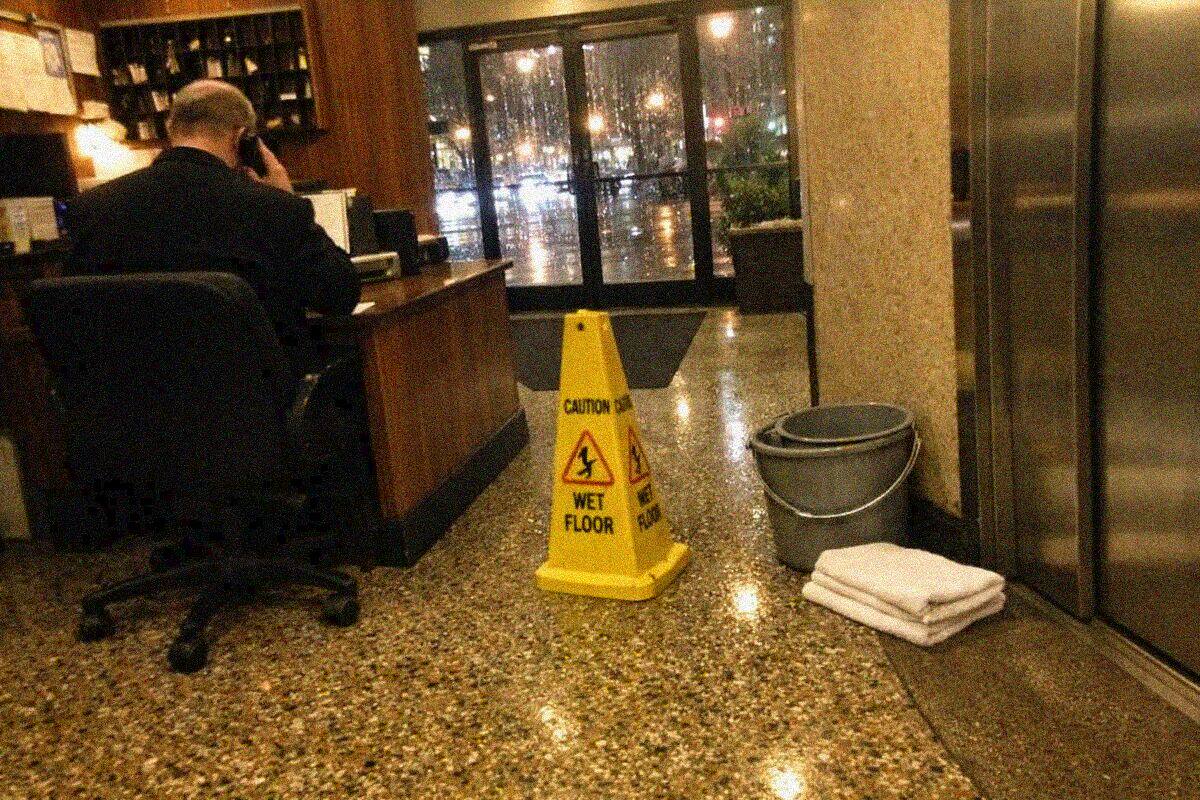
In a Rental: The Landlord Owes You a Habitable Apartment
In a rental the landlord is responsible for repairing water damage to the apartment under the statutory warranty of habitability and the Housing Maintenance Code, whichever unit the water came from. The tenant's obligations are to report it, to allow access for the repair and to take reasonable steps like shutting a valve or moving belongings. Your own furniture, clothes and electronics are your loss, which is what an HO-4 renters policy is for.
The route when the landlord is slow is the super, then the management office in writing, then 311. A 311 complaint about a water leak goes to HPD, and if it is not resolved a Code Enforcement inspector visits and can issue a violation. Violations are classed by severity: Class A is non-hazardous with a long correction period, Class B is hazardous with a shorter one and is where a substantial leak usually lands, and Class C is immediately hazardous with a correction window measured in hours, which covers things like a collapsing ceiling and, under Local Law 55, mold of thirty square feet or more. A violation on the record is what turns a repeated promise into a deadline.
A landlord can hire whoever they like for the repair, and many tenants find the drying starts faster when they arrange it and the landlord agrees to reimburse or to deduct it in writing. Get that agreement in writing before the equipment arrives. The moisture map and the dry-out record are worth keeping either way, since they are the evidence that the apartment was wet, how far, and that it was dried.
In a Co-op: The Corporation Is Your Landlord
A co-op shareholder does not own the apartment; the corporation owns the building and the shareholder holds a proprietary lease. That makes the co-op the landlord in law, which means the warranty of habitability and the Housing Maintenance Code apply to it, and the building is responsible for getting the apartment repaired first even when the water came from a negligent neighbor. The corporation then pursues that shareholder for what it spent. Waiting for the two shareholders to sort it out between themselves is how a wet apartment sits for a month.
What the building pays for and what the shareholder pays for is set by the proprietary lease, and paragraph 18 of the standard form used across the city is the usual dividing line: the shareholder is responsible for everything inside the apartment, meaning the walls and floors from the plaster in, the fixtures, the cabinets and the appliances, and the corporation is responsible for the structure, the pipes inside the walls and the common elements. A riser that bursts inside the wall is the building's pipe; the parquet it ruined is the shareholder's floor, paid for by the shareholder's HO-6 policy and recovered from whoever was at fault. Boards read paragraph 18 differently and some houses have amended it, so ask the managing agent for the building's version.
One thing a shareholder cannot do is stop paying maintenance because the leak keeps coming back. The courts have been clear that maintenance is owed regardless, and withholding it puts the shareholder in default under the lease while the leak is still running. The lever a shareholder has is the corporation's own duty as landlord, the board's right of entry into the offending unit, and the co-op's insurer.
In a Condo: The Declaration Draws the Line
A condo owner owns the unit outright and a share of the common elements, and the declaration and bylaws define where one ends and the other begins. The owner repairs and pays for what is inside the unit; the board repairs and pays for the common elements out of common charges or the master policy. Where the boundary falls varies: many declarations put it at the unfinished inner surface of the perimeter walls, floors and ceilings, some run it to the midpoint of the wall between two units, and the pipes serving only one unit are often that unit's even where they run inside a common wall.
That boundary decides who dries and who rebuilds. A leak from a pipe serving only the upstairs unit is that owner's responsibility and their HO-6 carrier's claim; a leak from a common riser is the board's. Reading the declaration before the argument starts saves weeks, and a moisture survey that states where the water came from, in writing, is what the two owners and the board are each going to need.
HO-4, HO-6, the Master Policy and Subrogation
File on your own policy first and let the carriers sort out who pays whom.
A building carries a master policy covering the structure and the common elements. A renter carries an HO-4 policy covering belongings and, usually, some liability. A co-op shareholder or condo owner carries an HO-6 policy covering the inside of the unit, its improvements, belongings and liability. When a leak crosses from one unit into another, the standard advice from managing agents and insurers is that each affected resident files on their own policy first, the building files on its master policy for the common elements, and the carriers then subrogate, meaning the carrier that paid pursues the party at fault or their insurer to recover it.
Subrogation is why the source finding matters so much. If the upstairs neighbor's washing machine hose failed, their HO-6 or HO-4 carrier is the one the other carriers pursue. If a building riser failed, it is the master policy. A moisture and leak location report that names the source is the document that keeps a claim from being denied for lack of a cause, and the dry-out record is what shows the damage was mitigated promptly, which every policy requires. Any contractor who offers to bill the insurer directly should say whose insurer: yours, the neighbor's or the building's.
A deductible on the master policy is often large, and some buildings pass the deductible to the shareholder or owner whose unit caused the loss under the house rules or the bylaws. Check that before assuming the building will absorb it. Nothing on any policy pays out without a claim being filed, and the carrier decides coverage; the documents from the job are what the decision rests on.
What the Board and Management Need Before Anyone Starts
A managed building will not let drying equipment through the door without paperwork on file, and the faster it is provided the sooner the machines run. The standard set is a certificate of insurance naming the building and the managing agent as additional insured, an equipment list with amperage so the super knows what is plugging into which circuits, and a written access plan covering which days readings are taken and who lets the contractor in. For the repair stage, a co-op or condo board usually requires an alteration agreement, even for like-for-like restoration, with a deposit, a work-hours rule and a requirement that any plumbing be done by a Licensed Master Plumber.
The super is the person who makes the day work. They hold the keys, know the freight elevator hours, know which riser serves which line, and are often the first to know that three apartments in the same stack have the same stain. The managing agent handles the board, the insurer and the neighbor who will not open the door. Both get a copy of the moisture report and the drying log, and both are told before every visit.
- Certificate of insurance naming the building and managing agent, general liability and workers' compensation at the limits the house requires
- Equipment list with amperage and a note of what runs overnight
- Written access plan: days, hours, who admits the contractor, and which neighboring units need to be entered
- Freight elevator booking and any porter charge for weekend or after-hours moves
- Alteration agreement and, where required, DOB permits for the repair stage
- License numbers on file: NYS Mold Remediation Contractor where mold is involved, Licensed Master Plumber for any plumbing, EPA Lead-Safe for pre-1978 paint
If You Are the Downstairs Neighbor
The apartment below the leak has the wet ceiling, the ruined floor and the least control over the cause. Your first calls are the super, to get the water stopped upstairs, and your own carrier, to open a claim under your HO-4 or HO-6. Photograph the ceiling and the floor as they are, write down when you first noticed it and what the super said, and keep the messages. Ask the super for the upstairs unit number and what was found, and get the moisture survey done of your apartment, because the extent of the damage on your side is your claim and it has to be measured before it dries out unevenly on its own.
Your drying and your repairs do not wait for the upstairs neighbor to accept fault. In a rental the landlord repairs your apartment; in a co-op the corporation gets it repaired and recovers from the negligent shareholder; in a condo your carrier pays and subrogates. In each case the document that moves things is the report naming the source, so ask for one and share it with the managing agent.
What Drives the Cost of Apartment Water Damage in New York
The cost of an apartment loss splits three ways: the mitigation, meaning extraction, drying and any removal; the repair, meaning plaster, drywall, floors, paint and trim; and, where it applies, the neighbor's side of the same leak. Published 2026 national cost surveys from Angi and HomeGuide put water damage mitigation at about 3.75 to 7.50 dollars per square foot of affected area, with clean-water work toward the lower end, and the repair afterwards is often the larger half wherever material was removed. New York sits at or above the top of every national range because of labor, insurance, building logistics and the pre-war finishes being put back. The figure for your apartment is written after the survey and before any wall is opened.
- Square footage wet, from the moisture map, across your unit and any adjoining ones
- Water category: a clean supply line dries; a waste stack or a toilet overflow removes porous material
- Finishes: three-coat plaster and pre-war parquet cost more to dry and far more to replace than drywall and strip flooring
- Whether the source is in your unit, a neighbor's or the building, which decides whose policy and whose deductible
- Building logistics: freight elevator windows, porter charges, a certificate of insurance and an alteration agreement for the rebuild
- Days of equipment time, justified one day at a time by the readings
Signs the Water Is Coming From Another Unit or the Building
Where it shows up in a New York apartment says a lot about where it came from.
A ceiling stain under a bathroom or kitchen above
The most common apartment leak in the city: a tub, a toilet seal, a dishwasher line or a sink trap in the unit above. The super needs to be upstairs before the drying starts down here.
Water at the base of a wall with a riser in it
A supply or heating riser inside a chase wets the wall from the inside out, and the same line shows the same stain on several floors.
Staining along the top of an exterior wall
That is the facade, the parapet or the roof, which are the building's in every form of ownership.
Water arriving during rain only
Roof drains, leaders inside walls and window lintels leak on the weather, and they are common elements in a condo and the corporation's in a co-op.
A wet closet or hallway with no plumbing nearby
Water traveling along a slab or a block wall from another line, which needs meters and a camera to trace before anyone is blamed.
How an Apartment Water Damage Call Runs in New York
Call, and call the super
A person answers at any hour. Say whether you rent, own shares or own the unit, where the water is coming in, and whether the super has been upstairs yet. Stopping the water is the first job and the super holds the riser valves.
Survey, source and photographs
The contractor maps the wet area in your apartment, traces the source with meters and thermal imaging, and photographs everything as found. The report names the source in writing.
Paperwork to management, claim opened with your carrier
Certificate of insurance, equipment list and access plan go to the managing agent. You open a claim on your HO-4 or HO-6 and the building is told to notify its master carrier.
Drying, with daily readings shared with everyone
Equipment runs until a dry standard from your own apartment is met, and the daily log goes to you, the managing agent and the adjuster.
Repair scope in writing, alteration agreement, then rebuild
The handoff from drying to repair is agreed in writing, the board's alteration agreement is signed where required, and the plaster, floors and paint go back.
Water in the Apartment Right Now?
Tell us what has happened and where, and we will get the response moving. If water is still coming in, find the shutoff or call the super first.
The phone is picked up 24 hours a day, seven days a week, on every holiday in the year.
Why New Yorkers Call This Number
Written for the 62 Percent Who Live in Multi-Unit Buildings
The 2023 Housing and Vacancy Survey puts 62 percent of New York homes in buildings of six or more units, and every report the contractor we dispatch produces is written so a landlord, a managing agent, a board and two carriers can each use it.
The Source Named in Writing
Subrogation between an HO-4 or HO-6 policy and a building's master policy turns on whose pipe failed, so the moisture and leak location report states the source and what was ruled out before anyone is billed.
Board Paperwork on the First Day
Certificate of insurance, equipment list with amperage and a written access plan go to the managing agent before the first unit comes up the freight elevator, and the alteration agreement for the rebuild is raised while the drying is still running.
A typical co-op leak call in Forest Hills
The situation: a shareholder on the third floor of a 1950s six-story co-op with water coming through the bathroom ceiling and running down into the hallway parquet. The super found the shareholder above away for the week and the bathroom radiator valve on that floor dripping steadily into the floor. The downstairs shareholder had already been told by a neighbor that the building would not cover it because it was the upstairs unit's fault.
What gets done: the super shut the heating riser to that line and the contractor mapped the wet area, which ran under the hallway parquet toward the front door, and photographed the ceiling and floor as found. The report named the upstairs radiator valve as the source. The managing agent received the certificate of insurance and equipment list the same afternoon, drying equipment ran for just over a week with the log shared with the agent and both shareholders' carriers, and the corporation, as landlord under the proprietary lease, arranged the ceiling repair while the downstairs shareholder's HO-6 carrier took the floor.
The result: the ceiling and the floor are dried and repaired without waiting for the two shareholders to settle fault, the corporation recovers its outlay from the upstairs shareholder under the lease, the HO-6 carrier subrogates against the upstairs policy for the parquet, and the downstairs shareholder keeps paying maintenance and keeps a file of documents that proves the whole story.
Before you let anyone open a wall
A short checklist for hiring a water damage contractor in New York City: the licenses to look up, the warning signs, and the four documents to ask for on any job.
Questions New Yorkers Ask
How fast can someone get to my apartment?
The line is answered 24 hours a day on every day of the year, and the response starts with that call. What sets the arrival time is the building: a walk-up with a super on site is direct, a doorman building that wants a certificate of insurance on file first takes as long as its management office takes. Tell whoever answers about the building and the paperwork starts at once.
The leak came from upstairs. Do I have to chase my neighbor?
In a rental, no: the landlord repairs your apartment regardless. In a co-op, no: the corporation is the landlord in law and repairs first, then recovers from the negligent shareholder. In a condo your carrier pays under your HO-6 and subrogates against the neighbor's. In all three your job is to document, file and get the apartment dried.
What does my HO-6 or HO-4 cover?
An HO-4 covers a renter's belongings and usually liability. An HO-6 covers the inside of a co-op or condo unit, its improvements, belongings and liability. The building's master policy covers the structure and common elements. Each policy is read by its carrier and the carrier decides coverage; the moisture report and the drying log are what the decision is based on.
Can I withhold maintenance or rent until it is fixed?
In a co-op, no. Maintenance is owed regardless and withholding it puts you in default. A rental tenant has more room under the warranty of habitability, but the safer route is a written complaint, then 311 and an HPD violation, which puts a correction deadline on the landlord without putting your tenancy at risk.
Does the board have to approve a water damage repair?
In most co-ops and condos, yes, through an alteration agreement, even for like-for-like restoration, and any plumbing has to be done by a Licensed Master Plumber. Drying equipment needs the certificate of insurance, equipment list and access plan on file first. Raising the alteration agreement while the drying is still running keeps the rebuild from stalling.
Who arranges access to the apartment the water came from?
The super and the managing agent. A landlord has access rights under the lease, and a co-op or condo board has a right of entry for repairs under the proprietary lease or the bylaws. The leak location report gives them the unit and the fixture to go to.
Related Services
Ceiling Leak Water Damage
The stain that came from the apartment upstairs, and the plaster ceiling that is starting to sag under it.
Read more →Moisture Detection and Leak Location
Meters and thermal imaging to find where the water went inside plaster, lath and shared walls.
Read more →Water Damage Repairs and Reconstruction
Plaster, drywall, skim coat, paint, trim and flooring, with the handoff from drying to rebuild agreed in writing.
Read more →All 14 services are listed on the services page. How the process runs end to end is on the home page, and the about page explains what to expect from whoever attends.