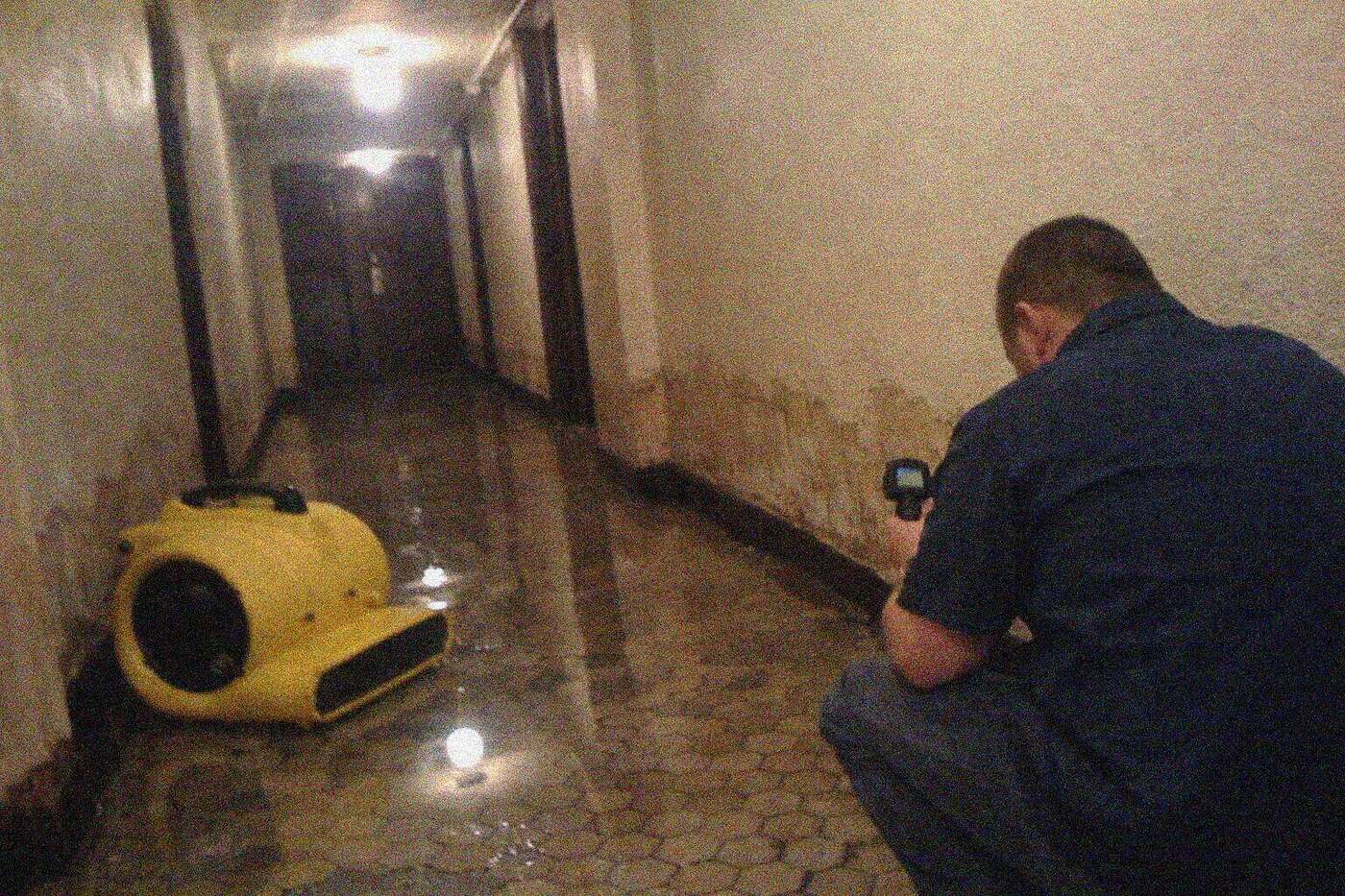
Moisture Detection and Leak Location in New York City
Finding where the water went, and which apartment it came from, before anyone opens a wall.
Moisture detection and leak location answers two separate questions on a New York water damage job: how far the water has spread inside the plaster, the block and the floors, and where it came from, which in a multi-unit building usually means which apartment or which riser. Meters answer the first question, thermal imaging narrows the second, and the two together mean a wall gets opened once, in the right place, instead of in three places on a guess.
The building makes this harder than it is in a house. Water from a failed fitting on the ninth floor can show up as a stain on the sixth, having run down a riser chase, across a terracotta block wall and along the top of a slab. A tenant sees a wet ceiling; the super sees three apartments in the same line with the same complaint; the source is somewhere above all of them. The contractor we dispatch reads the building from the wet apartment upward until the trail ends at a fitting, a pipe or a fixture, and writes down what was found and what was ruled out.
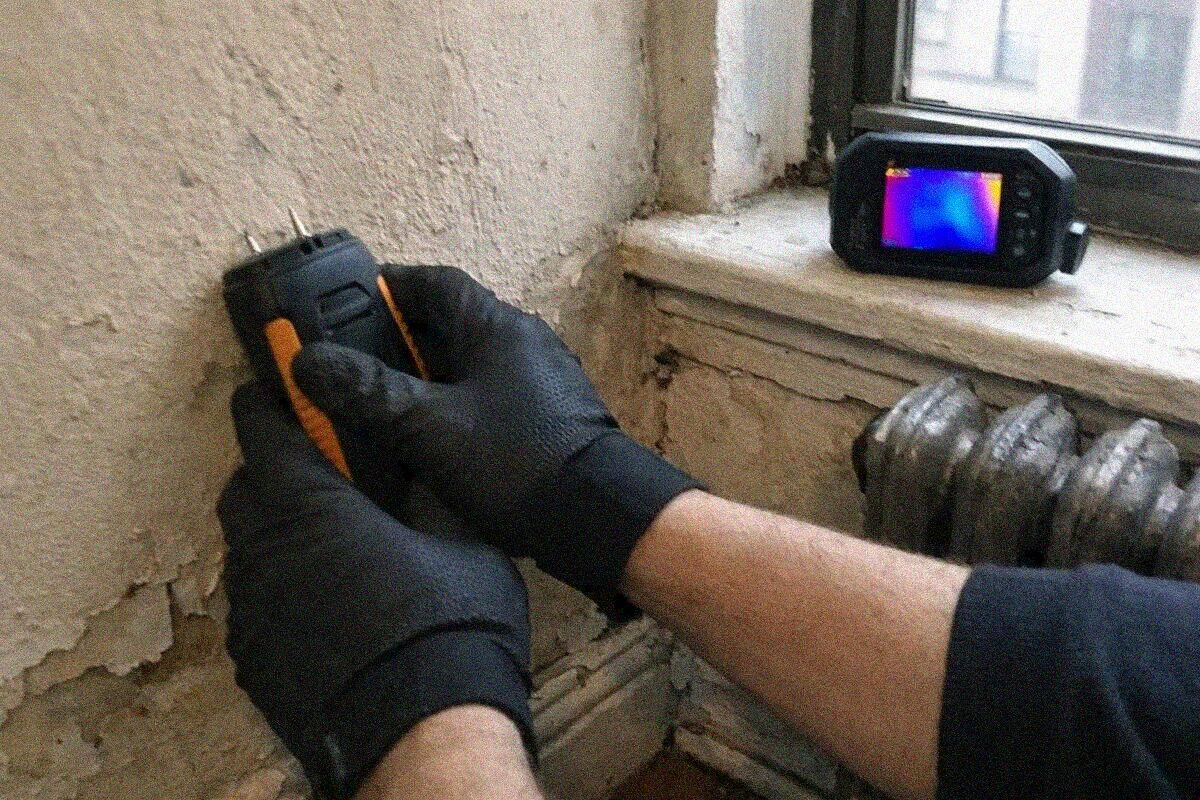
What Moisture Detection and Leak Location Includes
The service is a survey, a source investigation and a written report. The survey maps every wet surface in the affected apartment and the ones adjoining it, with readings marked on a sketch so the drying and any demolition are sized to what is wet. The investigation follows the water back through the building to its origin, using thermal imaging, meters, a borescope through a small hole where needed, and the building's own plumbing layout. The report states the wet extent, the source, what was ruled out and what has to be opened, which is what the super, the board, the landlord and any insurer will each ask for.
- Pinless meter scan of walls, ceilings and floors to find the wet edge without leaving marks
- Pin readings at the base of walls, at cracks and in trim to confirm depth and give a number against a dry standard
- Thermal imaging to show the temperature pattern of evaporation or of a hot water or steam leak behind the finish
- Borescope inspection through a small hole into a chase, a ceiling cavity or behind a cabinet, so a wall need not come off to see
- Fixture and riser tests: running the fixtures above in sequence, dye in a toilet tank, a pressure test on a supply line where a plumber is involved
- A written report with the moisture map, the source, what was excluded and the recommended opening
Thermal Imaging Reads Temperature, and a Meter Confirms Moisture
A thermal camera shows where to put the meter; the meter is the measurement.
A thermal imaging camera sees the surface temperature of a wall, and wet material shows up because evaporation cools it, or because a hot water or steam leak warms it. What the camera cannot do is tell the difference between a wet patch, a draft from a window, a cold water pipe, a missing bit of insulation in an exterior wall, or the steel beam behind a pre-war plaster ceiling. All of those produce a cold shape on the screen. The picture points to the place; the meter reading proves the material is wet.
On plaster and lath the pairing matters even more, because the plaster face can read damp to a pinless meter while the cause is a cold riser in the wall behind it, and a thermal image of the same spot shows the straight vertical line of a pipe rather than the spreading shape of a leak. On a terracotta block partition the block wicks water sideways in a line along the wall, which the camera shows as a horizontal band and the meter confirms cell by cell. Anyone who shows you a thermal image as proof of water on its own has done half the job.
Finding Which Apartment the Water Came From
In a building of six or more units, which is where 62 percent of New York homes are according to the 2023 Housing and Vacancy Survey, the source of a leak is usually somebody else's problem to fix and your problem to prove. The investigation starts in the wet apartment and works up the line: is the stain under a bathroom or kitchen above, does it track along a riser chase, is the apartment above reporting anything, and does the pattern match a one-time overflow or a slow, continuing drip. A one-time overflow leaves a wet area that is drying at the edges by the time it is surveyed. A continuing leak has a wet center that reads wetter each day.
The tests are mostly done with cooperation from the super and the neighbors above. Running each fixture in the apartment above while watching the stain with a thermal camera identifies a drain leak in minutes. Dye in a toilet tank finds a wax seal. A shower pan test finds a cracked pan or a failed tile joint. Where the neighbor is away or refuses access, the building's riser layout and the readings from the chase wall in your apartment narrow the source, and the report says what could and could not be tested, which is what the managing agent needs to compel access under the lease or the proprietary lease.
Sometimes the source is the building itself: a cast-iron waste stack cracked at a hub, a galvanized supply riser rusted through at a coupling, a roof drain leader running inside a wall, or a steam line. Those are the building's repairs in a co-op, common elements in a condo and the landlord's in a rental, and the difference between a neighbor's failed fitting and a building riser is the difference in who pays, so the report is careful to state which it was.
Con Edison Steam and Other Manhattan Sources
Manhattan below 96th Street is served by the Con Edison district steam system, which the company says serves more than three million people from the southern tip of the island northward. Buildings on it take steam from a service line through a meter and a pressure-reducing station, and a failure on the building side of that station, at a trap, a valve or a condensate return, puts hot water and steam into a basement, a chase or a wall. The damage pattern is different from a cold water leak: the surfaces are hot to a thermal camera rather than cold, the plaster dries and cracks around the wet area, and the moisture spreads as vapor into rooms far from the fault.
Steam-heated buildings above 96th Street and in the other boroughs have their own boilers and the same failure points on radiator valves, air vents and return lines. Either way, a steam leak is a job for the building's heating contractor or a Licensed Master Plumber to repair, and the moisture survey has to wait for the system to be shut down at that zone before the readings mean anything.
Opening a Wall Once
The whole point of the investigation is that the wall gets opened one time, in the right spot, at the size the readings justify. In a pre-war apartment that opening is in three-coat plaster that took a plasterer days to put up and will take a plasterer to close, and every unnecessary hole is a repair, a paint match and a day of dust. The survey names the spot, the borescope confirms through a hole the size of a coin, and the opening is cut to reach the pipe or the wet cavity and no wider.
The report also states where the wall was not opened and why, because the second most expensive mistake in this trade is drying a building while the leak that wet it is still running. Where the source is in another apartment, that unit's opening is that unit's repair, and the report gives the super or the managing agent the location to take upstairs.
What Drives the Cost of Moisture Detection and Leak Location in New York
Detection is charged for the visit and the time on site, plus any small openings and tests, and it is a fraction of what the drying, demolition and repair that follow will cost. Published 2026 national cost surveys from Angi and HomeGuide put water damage mitigation at about 3.75 to 7.50 dollars per square foot of affected area, and the moisture map is what decides how many square feet that is, so a good survey pays for itself by trimming the drying scope to the wet area instead of the visible stain. New York sits at or above the top of the national range. The figure for your apartment comes in writing after the survey.
- Number of apartments and floors the investigation has to cover before the source is found
- Access: whether the super and the neighbors above are available the same day or the tests have to wait
- Openings and tests needed, such as a borescope hole, a fixture-by-fixture run, a dye test or a pressure test with a plumber
- Material: plaster and lath and terracotta block take more readings than drywall to find the wet edge
- Whether a Licensed Master Plumber has to attend for a pressure test or a riser inspection
- Building paperwork, since a doorman building may need a certificate of insurance on file even for a survey visit
Building Logistics for a Leak Investigation
A leak investigation moves through other people's apartments, and the super is the person who makes that possible. Tell the super on the first call, ask whether the line above has reported anything, and ask for the riser layout if the building has one. In a managed co-op or condo the managing agent will want to be copied on the report, since the board decides whether the repair is the building's or a shareholder's. A certificate of insurance is often asked for even for a meter-and-camera visit in a doorman building, and the contractor we dispatch has it ready.
If the apartment above is a rental in a building you do not own, access is the landlord's to arrange under the lease. If it is a co-op or condo neighbor, the proprietary lease or the bylaws give the board a right of entry for repairs, which the managing agent uses when a neighbor will not answer the door. Those steps take a day or two, so the survey of your own apartment is done first and the upstairs tests follow when the door opens.
Signs the Water Is Coming From Somewhere You Cannot See
These are the calls where meters and a camera save a wall.
A stain that comes back after being painted
A repainted patch that stains again in weeks has a live source behind it, and the third repaint is the expensive one because the plaster is now soft.
A wet patch with no fixture above it
When nothing in the apartment upstairs sits over the stain, the water traveled along a chase or across a block wall from somewhere else, and the trail has to be followed.
Several apartments in the same line with the same complaint
A riser or a waste stack leak shows up on every floor it passes, and the source is above the highest apartment reporting it.
A musty smell with nothing visible
Wet lath, block or subfloor behind an intact finish gives off the smell weeks before any stain reaches the paint.
A warm patch on a wall or floor
Cold water leaks read cold; a hot water or steam leak reads warm, and in a Manhattan building on district steam it can be well away from any radiator.
A water bill or a building meter reading that climbed
In a house or a small building with its own meter, a jump with no change in use is a supply leak running somewhere out of sight.
How a Leak Location Call Runs in New York
Call and describe the pattern
A person answers at any hour. Say where the stain is, whether it is growing, what is above it, and whether the super knows of other apartments affected.
Survey the wet apartment
The contractor scans and meters every affected surface, marks the wet edge on a sketch, and takes a thermal image of the area to see the shape of the source.
Follow the water up the building
With the super, the apartments and risers above are tested in sequence, fixture by fixture, until the readings and the camera agree on the origin.
Confirm through one small opening
A borescope hole or a single cut confirms the pipe, fitting or cavity before any wall comes off, and the size of the opening is set by what was found.
Written report to everyone who needs it
The moisture map, the source, what was ruled out and the recommended opening go to you, the super, the managing agent and any insurer, so the repair and the drying scope follow from the same document.
Water in the Apartment Right Now?
Tell us what has happened and where, and we will get the response moving. If water is still coming in, find the shutoff or call the super first.
The phone is picked up 24 hours a day, seven days a week, on every holiday in the year.
Why New Yorkers Call This Number
The Camera Points, the Meter Proves
Every thermal image is confirmed with a pin or pinless reading against a dry standard from your own apartment, because a cold shape on a screen can be a draft, a cold riser or a steel beam as easily as a wet wall.
One Opening, Sized by the Readings
The source is confirmed through a borescope hole before any three-coat plaster comes off, so the opening is cut once, where the pipe is, and the report states where the wall was left closed and why.
A Report Written for the Super and the Board
In a city where 62 percent of homes are in buildings of six or more units per the 2023 Housing and Vacancy Survey, the finding that matters is whose pipe it was, and the report names the riser, the fixture or the unit so responsibility follows the evidence.
A typical leak location call in Jackson Heights
The situation: a second-floor apartment in a 1930s garden apartment co-op with a stain spreading across the bathroom ceiling and down the wall toward the hallway. The apartment above had been checked by the super, who found the bathroom dry, and the shareholder had been told it must be condensation.
What gets done: the moisture map showed the wet area running along the hallway wall toward the building's riser chase and reading wettest at the chase, well away from the upstairs bathroom. A thermal image of the chase wall showed a cold vertical band with a wider cold shape near the ceiling. With the super, the fixtures in the apartments above were run in sequence while the stain was watched, and the kitchen sink two floors up produced a fresh cold spot on the camera within a minute. A borescope through a small hole in the chase wall found a cast-iron waste stack hub weeping at the joint serving that kitchen.
The result: the source is a building stack, which the co-op repairs through its plumber, the shareholder's bathroom ceiling is dried to the mapped extent instead of being torn out on a guess, the chase wall is opened once at the hub, and the report gives the managing agent what the board needs to treat the repair as the building's.
Before you let anyone open a wall
A short checklist for hiring a water damage contractor in New York City: the licenses to look up, the warning signs, and the four documents to ask for on any job.
Questions New Yorkers Ask
How soon can someone come and find the leak?
The line is answered 24 hours a day, every day of the year, and the visit is arranged from that call. If water is still coming through, say so, because stopping it comes before finding it; the super may be able to shut a riser while the contractor is on the way.
Can thermal imaging see through my wall?
No. It reads the temperature of the surface it is pointed at, and wet material shows up because evaporation cools it or a hot leak warms it. Cold risers, drafts and steel beams show up too, which is why every image is checked with a meter reading before anything is opened.
The super says the apartment upstairs is dry. Where else can the water be from?
A riser chase, a waste stack, a roof leader running inside a wall, a terracotta block wall wicking sideways from another line, or an apartment two or three floors up. Water in a New York building travels a long way before it shows, and the fixtures above are tested in sequence with a camera on the stain until the source declares itself.
Will the wall have to be opened?
Usually once, at the source, at the size the readings justify. The survey and a borescope through a small hole confirm the spot first, so a three-coat plaster wall is cut in one place and closed by a plasterer once, and the report states where it was left closed.
What if it turns out to be a Con Edison steam leak?
Below 96th Street in Manhattan the district steam system is a real source, and a building-side failure at a trap, valve or condensate return puts hot moisture into walls far from the fault. The survey identifies it by the warm pattern on the camera, the repair belongs to the building's heating contractor or a Licensed Master Plumber, and the moisture readings are taken once that zone is shut down.
Who gets the report?
You, and with your say-so the super, the managing agent, the landlord and any insurer. It states the wet extent, the source, what was ruled out and the recommended opening, which is the document the board uses to decide whether the repair is the building's or a shareholder's.
Related Services
Ceiling Leak Water Damage
The stain that came from the apartment upstairs, and the plaster ceiling that is starting to sag under it.
Read more →Structural Drying and Dehumidification
Air movers and dehumidifiers sized to the room, with readings taken daily until the plaster and joists are dry.
Read more →Burst and Frozen Pipe Water Damage
Split risers, frozen lines on exterior walls, failed radiator valves and the washer hose that let go on a Sunday.
Read more →All 14 services are listed on the services page. How the process runs end to end is on the home page, and the about page explains what to expect from whoever attends.