Basement and Cellar Flooding in New York City
Row-house cellars, finished basements and below-grade apartments, where the sidewalk hatch and the sewer both find a way in.
Basement and cellar flooding in New York is the most common water damage in the city's one- to three-family homes, and the numbers are large: the NYC Comptroller counted 424,800 basements and cellars in those homes in 2022, with 43,000 of them at flood risk now and 136,200 expected to be by the 2050s. Water gets in through the sidewalk hatch, the areaway, a sloped driveway, the floor drain when the sewer surcharges, or the foundation wall when the water table rises, and the cleanup depends on which.
The line is answered at any hour. Tell whoever picks up whether the water came in from the street, up through a drain, or through the wall, and whether anyone lives below grade, because the handling and the urgency change with the answer.
Basement or Cellar: the Definition Decides a Lot
New York's building code calls a below-grade floor a basement if at least half its height is above the curb level and a cellar if more than half is below it.
The distinction matters because it decides what the space may legally be used for. A basement can, with the right permits, be a lawful dwelling. A cellar cannot be a dwelling under the Housing Maintenance Code, whatever the landlord calls it. The Comptroller's 2022 report estimates that between 300,000 and 500,000 New Yorkers may live in basement and cellar units, most of them unregulated, and the same report puts the count of basements and cellars in one- to three-family homes at 424,800.
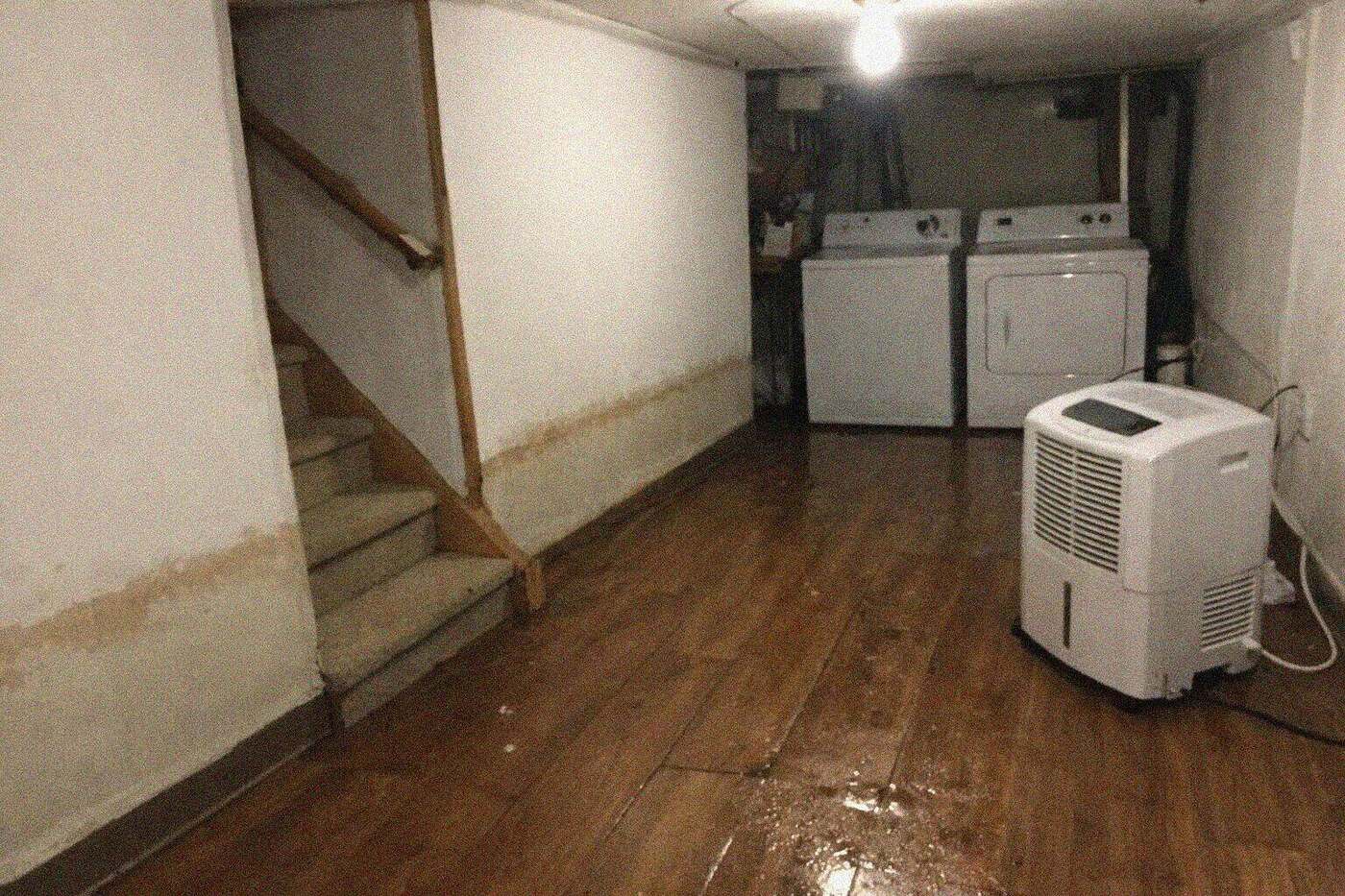
For a flood cleanup the definition changes who is at risk and what the space is finished with. A cellar used for storage and mechanicals floods onto a concrete floor with a boiler, a water heater and the electrical panel in it. A basement finished as an apartment floods onto carpet, drywall, furniture and beds, with people inside who may have a single exit up a narrow stair. The Department of Health's Ida data story counted ten of the city's fourteen deaths in that storm in basement apartments, and the cleanup rules for an occupied unit are stricter for a reason.
Owners considering legalizing a basement unit under the 2023 Basement Apartment Conversion Pilot will find that flood protection, including a backwater valve and a second means of egress, sits at the center of the requirements. The same measures are what a cleanup crew will tell you to add after a flood in any case.
Where the Water Gets In
The Department of Environmental Protection's own flood-preparedness checklist names below-grade openings such as exterior stairs and sloped driveways as the routes water takes into a home, and in a New York row house those openings are the steel sidewalk hatch over the cellar stair, the areaway in front of the ground-floor windows, and the driveway that slopes down to a garage under the house. Each one collects street water and delivers it to the lowest point of the building.
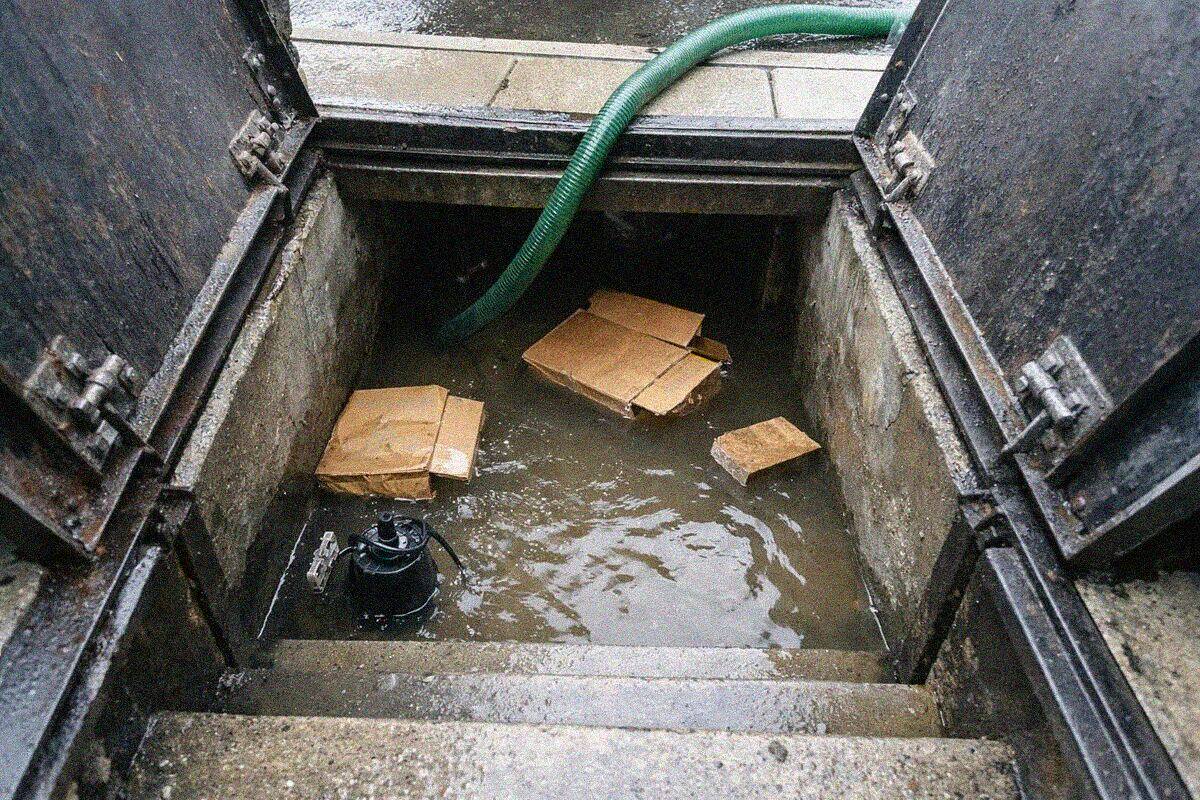
The hatch is the classic case. A pair of steel doors set flush in the sidewalk, with a gap at the hinge and a seal that has been gone for decades, sits directly over an open stair into the cellar. In a cloudburst the sidewalk becomes a channel, the water pours through the gap and down the stair, and the cellar floods from the front while the owner watches the rain from the parlor floor. An areaway does the same thing through the window wells, and a sloped driveway becomes a ramp into the garage.
Groundwater is the other route. In neighborhoods built on filled marsh or close to the water table, a heavy rain raises the level under the slab and the water comes up through the floor and through the joint where the slab meets the foundation wall. That water arrives clean by the definition of the IICRC S500 standard until it has crossed the floor, at which point anything it has picked up decides its category.
- Sidewalk hatch: seal the hinge gap, fit a raised curb or a flood door, and keep the stair clear so water has somewhere to drain
- Areaway: clear the drain at the bottom before every forecast storm; a leaf-blocked areaway drain floods the front room
- Sloped driveway: a trench drain at the garage door connected to a sump, since it cannot drain to the sewer by gravity
- Floor drain and utility sink: the route the sewer takes back into the house, covered on the sewage backup page
- Foundation wall and slab joint: groundwater under pressure, which needs a sump pump and often exterior waterproofing
Backwater Valves, Sump Pumps and the Service Line
DEP states that the property owner owns and maintains the sewer service line from the house to the city main, and recommends a backwater valve installed in consultation with a plumber.
A backwater valve is a one-way flap on the house drain that closes when the street sewer surcharges, so the sewer cannot push back up through your floor drain and fixtures. It is installed on the house side of the house trap by a NYC Licensed Master Plumber, with a permit from the Department of Buildings, and it needs a look inside every year or so because a valve with a stick or a rag under the flap does nothing. DEP's guidance is to fit one in consultation with a plumber, and after a backup that is the first conversation to have.
A sump pump handles the other direction: groundwater and hatch water that reaches the floor. A pit at the low point of the cellar with a pump and a check valve, discharging to the street or the yard, keeps a cellar dry through a rain that would otherwise put an inch of water on the floor. In a finished basement apartment a pump with battery backup is worth the cost, because the power is often out during the storm that floods the block.
The service line between the house and the main is the owner's, and when it collapses or roots block it, the repair is the owner's to arrange through a Licensed Master Plumber, who files the work with DEP. What we get moving is the cleanup on the inside; the line repair is the plumber's job and we say so plainly.
Flood and Sewer Backup Are Excluded From Most Homeowner Policies
DEP notes that most standard homeowner policies exclude flood damage and sewer backup, and that is the first thing to check before assuming a claim exists.
Flood insurance in New York comes through the National Flood Insurance Program or a private flood policy, and it is a separate purchase from the homeowner policy. Sewer backup coverage is usually an endorsement added to the homeowner policy for a small premium, with a limit that is often lower than the cost of a finished basement. Water from a burst pipe inside the house is generally covered under the standard policy; water that came in from the street or up from the sewer generally is not, unless one of those two additions is in place.
The line between the two is the source, and it is one of the reasons the crew that attends writes down where the water came from and photographs the entry point. A claim for a burst washing machine hose is a different claim from one for a surcharged sewer, and a cellar that took both in the same storm needs the two separated on paper. The scope and the moisture log are written with that in mind.
FloodHelpNY, the city-backed resource for flood risk and insurance, lets you look up your address, and DEP's stormwater flood map shows the blocks that flood in a moderate and an extreme rain. Either is worth ten minutes before the next storm.
Groundwater, Street Water and Backup Are Handled as Category 3
Water that came off the street, up from the sewer or through the ground is Category 3 under the IICRC S500 standard, which means porous materials that soaked in it are removed and the remaining surfaces are cleaned and sanitized before anything is dried. Carpet and pad come out. Drywall is cut above the water line and the wet section is removed with the insulation behind it. Particleboard cabinets, cardboard boxes and anything upholstered that sat in the water goes. Concrete, block, tile and solid wood framing are cleaned and kept.
The crew works in protective equipment and keeps the contaminated waste in sealed bags on the way out, and the sump pit, the floor drain and the utility sink are cleaned along with the floor. Where the boiler, the water heater or the electrical panel sat in the water, the utility or a licensed tradesperson has to sign off before they are switched back on, and the crew will tell you so before you try.
A cellar that took clean groundwater and nothing else is a Category 1 job at the start, but it becomes Category 2 within a day or so as the water sits, which is the reason to call on the day it floods.
The Neighborhoods Where Cellars Flood Most
The city's own flood data and its Ida record point at the same set of low-lying and coastal neighborhoods every time.
In Brooklyn the recurring names are Canarsie, Red Hook, Gowanus and East New York, all built on low ground or filled marsh with combined sewers that surcharge in a cloudburst. In Queens the Ida flooding hit Flushing and Elmhurst hardest, and Jamaica, Hollis and Springfield Gardens have a long record of cellar flooding from a high water table and undersized drainage, with the Rockaways exposed to coastal surge as well. On Staten Island the East Shore from South Beach to Tottenville carries most of the borough's flood claims. In Manhattan the Lower East Side, Two Bridges and Battery Park City sit inside or beside the floodplain.
Rebuild by Design puts 1.3 million New Yorkers, 14 percent of the city, in or adjacent to the 100-year floodplain, and the Comptroller's figure of 43,000 basements and cellars at flood risk today is concentrated in the neighborhoods above. If your block is on that list, a backwater valve, a sump and a sealed hatch are the three measures that change the outcome of the next storm.
Row-House Logistics
A row house has no freight elevator, no doorman and no board, which makes the logistics simpler and the parking harder. The van stops at the curb for the unload, the hoses run out through the hatch or the front door to the gutter, and the extractor discharge goes to the street or to a sink on the parlor floor. Contaminated debris goes out in sealed bags to the van, and the crew works out with you where the bags wait if the van has had to move for alternate-side parking.
For work on a one- or two-family home the contractor we dispatch holds the NYC DCWP Home Improvement Contractor license, and the backwater valve, the sump discharge and any service-line work go to a NYC Licensed Master Plumber with the Department of Buildings permit that requires. In a three-family or larger building the owner or the managing agent is involved from the start, and if a tenant lives in the basement unit their belongings and their access come first.
Party walls carry water sideways between attached houses, so a flooded cellar on one side of a row often means a damp cellar next door. The crew takes a reading on the shared wall and will tell you if it looks like the neighbor should be checking their own floor.
What Drives the Cost of Basement Flooding Cleanup in NYC
Published 2026 national cost data from Angi and HomeGuide puts water mitigation at $3.75 to $7.50 per square foot, with contaminated water at the top of that range, and a New York cellar sits at or above it.
A groundwater flood on a bare concrete cellar is the cheapest version: pump, extract, clean, dry. A finished basement apartment that took street water or sewer backup is the most expensive, because carpet, drywall, insulation and cabinets come out and are disposed of as contaminated waste, and the rebuild afterwards is a separate figure on top of the mitigation.
The drivers are the water source and category, the depth and how long it stood, whether the space was finished or bare, whether the mechanicals sat in the water, and how much has to go out in bags. A cellar with a boiler and an electrical panel to be checked, a hatch to be sealed and a backwater valve to be fitted involves a plumber and an electrician alongside the cleanup, and each of those is a separate invoice.
Whoever attends writes a scope with the wet square footage, the materials to be removed, the equipment and the expected drying days, and separates the mitigation from the plumbing and the rebuild so you can see what a flood endorsement or an NFIP policy might respond to and what it will not.
Signs a Cellar Has Been Taking Water
A cellar that floods a little every storm leaves marks that show up long before the storm that floods it badly.
A tide line on the foundation wall
A horizontal band of staining or efflorescence marks how high the water has stood before. It is usually higher than the owner remembers.
Rust on the bottom of the boiler jacket or the water heater
Mechanicals that have sat in water rust from the base up. The line of rust is another tide mark.
Cardboard boxes soft at the bottom
Storage that has wicked water off the floor. Anything on the floor of a New York cellar wants to be on a shelf.
A sump pit that runs during every rain
The pump is doing its job and the water table is high. When the pump fails or the power goes, the cellar floods.
Water at the base of the hatch stair after rain
The hatch seal is gone and the sidewalk is draining into the house. A flood door or a raised curb fixes it.
A smell from the floor drain before a storm
The house trap is dry or the sewer is already surcharging. Both are reasons to call a plumber about a backwater valve.
How a Basement Flooding Call Runs in New York
Source and safety on the phone
Whoever answers asks where the water came in, how deep it is, and whether the panel, the boiler or a tenant is down there. Nobody goes into standing water with the power on.
Pump and extract
Submersible pumps take the depth off, then portable extractors clear the floor and pull water out of any carpet or pad that is staying.
Remove what soaked
On street water or backup, carpet, pad, cut drywall, insulation and soaked contents go out in sealed bags, photographed and listed as they leave.
Clean, sanitize, dry
The slab, walls, sump pit and drains are cleaned and treated, then air movers and a dehumidifier run until the readings hit the dry standard.
Scope, plumber, prevention
A written scope separates mitigation from rebuild, and the backwater valve, sump or hatch work is routed to a Licensed Master Plumber or the right trade.
Water in the Apartment Right Now?
Tell us what has happened and where, and we will get the response moving. If water is still coming in, find the shutoff or call the super first.
The phone is picked up 24 hours a day, seven days a week, on every holiday in the year.
Why New Yorkers Call This Number
Category 3 Handling for Street Water and Backup
Water off the sidewalk or up from the sewer is treated under the IICRC S500 Category 3 rules: porous material out, surfaces cleaned and sanitized, waste sealed on the way to the van.
DCWP Licensed for One- and Two-Family Homes
The contractors we dispatch hold the NYC DCWP Home Improvement Contractor license that work on a row house or a two-family requires, and any valve or line work goes to a NYC Licensed Master Plumber.
The Source Written Down on Day One
Flood and sewer backup are excluded from most homeowner policies, per DEP, so the entry point is photographed and the source stated in the scope before the water is gone.
A typical basement flooding call in Canarsie
The situation: a two-family house on a block south of Flatlands Avenue takes an evening cloudburst. Water comes through the sidewalk hatch at the front and, twenty minutes later, up through the floor drain at the back as the combined sewer surcharges. The tenant in the finished basement unit gets out up the interior stair with the water at ankle depth and rising.
What gets done: the owner switches the panel off from the parlor floor before anyone goes back down. The contractor we dispatch pumps the depth off, extracts the floor and pulls the carpet, pad and the lower two feet of drywall throughout the unit, along with the insulation behind it. The floor, block walls and drain are cleaned and sanitized, air movers and a dehumidifier run for the week, and the entry point at the hatch and the drain are photographed and named in the scope. A Licensed Master Plumber is arranged for a backwater valve and a sump pit.
The result: the basement reads dry on daily logs after the week, the owner has a scope that separates the sewer-backup portion from the hatch-water portion for the endorsement on the homeowner policy, and the valve and sump are in before the next storm rather than after it.
Before you let anyone open a wall
A short checklist for hiring a water damage contractor in New York City: the licenses to look up, the warning signs, and the four documents to ask for on any job.
Questions New Yorkers Ask
How quickly can someone come for a flooded cellar?
The phone is answered around the clock every day of the year, and the dispatch begins on the call. Arrival depends on the borough, the hour and how many blocks flooded in the same storm. While you wait, switch the power off to the cellar from a dry spot, stay out of the water, and open the hatch or a window so the space can vent.
Can I go down and start pumping myself?
Only with the power to the cellar off at the panel and only if the water is clean groundwater or hatch water. Street water and anything that came up a drain is contaminated, and wading in it without boots and gloves is a health risk. A rented pump is fine for taking the depth off; the cleaning and drying afterwards are what most people cannot do with household gear.
Will my homeowner policy cover this?
DEP states that most standard homeowner policies exclude flood and sewer backup. A burst pipe inside the house usually is covered; water from the street needs an NFIP or private flood policy, and water from the sewer needs a sewer backup endorsement. The scope names the source so the carrier can see which applies.
What is the difference between a basement and a cellar?
The building code calls it a basement if at least half its height is above the curb and a cellar if more than half is below. A basement can be a lawful dwelling with the right permits; a cellar cannot. The Comptroller counts 424,800 of the two combined in the city's one- to three-family homes.
Is the sewer line my responsibility?
DEP states that the property owner owns and maintains the service line from the house to the city main. Repairs and a backwater valve go through a NYC Licensed Master Plumber with a Department of Buildings permit. If the fault is in the city main, DEP repairs it; if it is on your side, DEP issues a Notice to Repair.
Do I need to replace the drywall or can it dry?
On clean groundwater caught quickly, drywall that reads wet at the base can sometimes dry with the baseboard off. On street water or backup it is contaminated and the wet section is cut out above the water line under the Category 3 rules. The meter and the source decide, and the decision is in the scope.
Related Services
Sewage Backup Cleanup
Category 3 water from a combined sewer surcharge or a blocked house trap, handled with containment and removal.
Read more →Storm and Flood Damage Cleanup
Cleanup after a cloudburst overwhelms the street drains or coastal water reaches the block.
Read more →Structural Drying and Dehumidification
Air movers and dehumidifiers sized to the room, with readings taken daily until the plaster and joists are dry.
Read more →All 14 services are listed on the services page. How the process runs end to end is on the home page, and the about page explains what to expect from whoever attends.