Ceiling Leak Water Damage in New York City
The stain came from upstairs, the plaster is starting to sag, and nobody has told you who is supposed to fix it.
A ceiling leak from the apartment upstairs is the most New York water damage call there is, because the person with the wet ceiling has no valve to close and no right to enter the apartment where the water is coming from. What gets it moving is the super, the building, and a crew that can meter the ceiling, get the water out of it and dry the assembly before the plaster comes down. Who pays for that depends on whether you rent, hold a proprietary lease or own a condo unit, and the rules for each are set out below.
The phone is answered at any hour. If the ceiling is bulging, stay out from under it, switch off the circuit feeding any fixture that is dripping, and call the super before you call anyone else; the water has to stop before the drying can start.
Who Is Responsible in a Rental
Your landlord owes you a habitable apartment under New York's warranty of habitability and the city's Housing Maintenance Code, whatever the cause of the leak.
The route runs through the super. Report the leak in writing, with photographs and the date, and give the building a reasonable chance to stop it and repair the ceiling. If nothing happens, a call to 311 opens a complaint with the Department of Housing Preservation and Development, and if the building does not resolve it, an HPD code enforcement inspector comes to look. A violation is classed A for non-hazardous with 90 days to correct, B for hazardous with 30 days, or C for immediately hazardous with 24 hours. A substantial leak is commonly written as Class B, and a ceiling in danger of collapse is Class C.
A leak violation has a second effect in buildings of three or more units. Local Law 55 of 2018, the Asthma-Free Housing Act, requires the owner to inspect for mold when a leak violation is issued and to investigate and correct indoor mold hazards every year. A mold area of 30 square feet or more in such a building is itself a Class C condition. So the landlord who leaves a ceiling wet is exposed on two fronts, and most managing agents know it.
As a tenant you are free to call for drying of your own apartment, and if the landlord is slow you may have to. Keep the invoice and the moisture log; they become part of the record if the leak turns into a rent abatement claim or a housing court matter.
Who Is Responsible in a Co-op
In a co-op the corporation is your landlord in law, so the building repairs the ceiling first and pursues the shareholder who caused the leak afterwards.
The proprietary lease is the document that matters, and paragraph 18 of the standard form used by most New York co-ops draws the line at the wall: pipes, risers, the structure and the ceiling plaster belong to the corporation, and everything inside your apartment from the finish inward, along with your fixtures and the branch lines serving them, belongs to you. Your upstairs neighbor's overflowing tub is their fixture. The ceiling under it is the building's plaster. Your painted finish on that plaster, and the rug beneath it, are yours.
Because the co-op owes you the warranty of habitability as a landlord, it cannot point at the neighbor and wait. The building repairs the ceiling and then recovers from the shareholder upstairs, or from that shareholder's HO-6 carrier, if the cause was negligence. Courts have also held that a shareholder with a recurring leak cannot withhold maintenance over it, so the pressure has to come through the board and the managing agent in writing.
What you can do is get the drying started in your own apartment and give the board a moisture log and a scope written by unit. Boards move faster when the paperwork already exists.
Who Is Responsible in a Condo
A condo's declaration and bylaws define where your unit ends and the common elements begin, and that line decides who pays for the ceiling.
In many New York condominiums the unit boundary runs to the unfinished surface of the ceiling, or to the midpoint of the slab or the wall, and the space beyond it is a common element the board maintains. A leak from the unit above that wets the common element and your finishes therefore has three parties in it: the owner above, the board and you. The declaration usually makes each owner responsible for damage their unit causes to others, and the board responsible for the common elements, and the carriers settle it between the owner above's HO-6, your HO-6 and the master policy.
The practical step is the same as in a co-op. Report to the managing agent in writing, photograph the ceiling and the floor, and get readings taken before the water dries and the evidence goes with it. Condo boards have no warranty of habitability obligation in the way a co-op does, so the written record carries more of the weight.
Plaster-on-Lath Ceilings Hold Water Until They Collapse
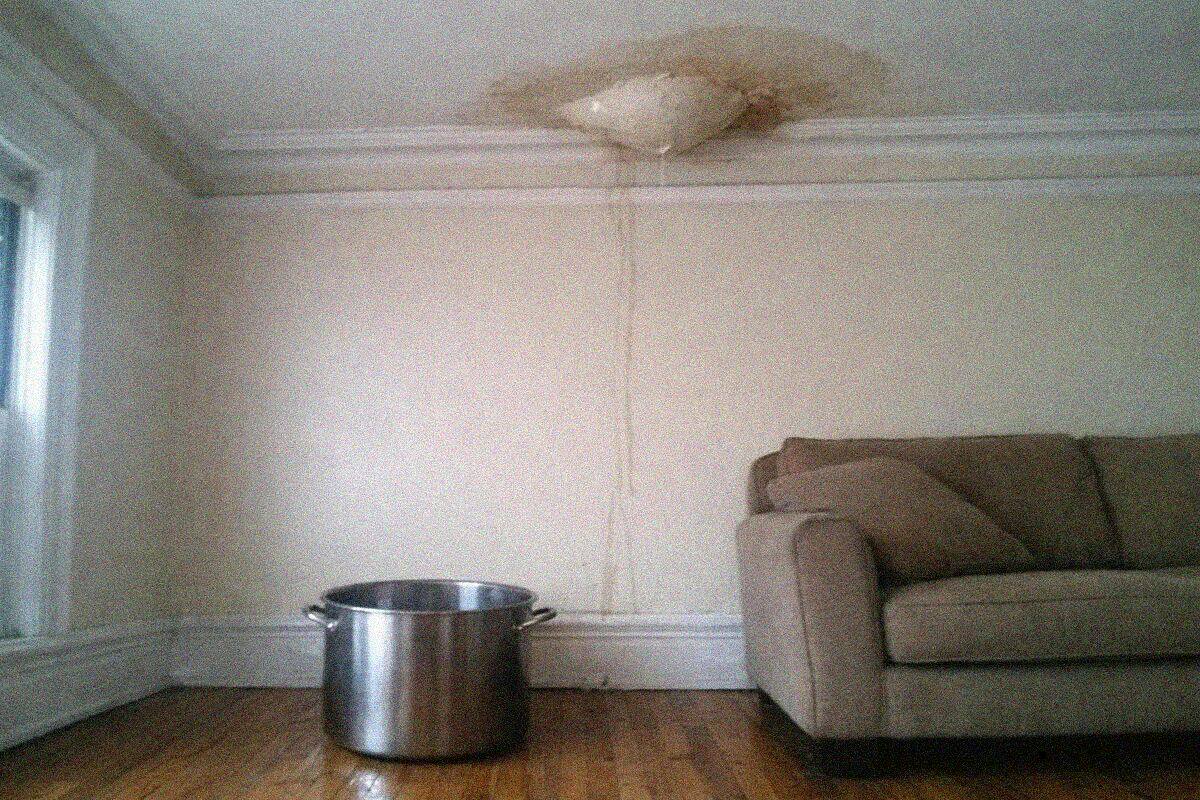
A pre-war ceiling is a layer of plaster keyed into wood or metal lath, an inch thick and heavy, and it takes water very differently from drywall. Drywall stains, softens and drips. Plaster absorbs water into the lath and the keys, holds it in a sag that grows over hours, and then gives way in a single section when the keys break. A bulge the size of a dinner plate can be holding several gallons, and it comes down with the lath and a century of dust behind it.
If a bulge has formed and is still growing, the crew that attends will usually drain it through a small hole into a bucket before anything else, which relieves the weight and lets the assembly be dried from below. Where the keys have already broken, the loose section is taken down under containment, because pre-1978 plaster and paint are handled as lead-safe work and the contractors we dispatch are EPA Lead-Safe Certified for that reason.
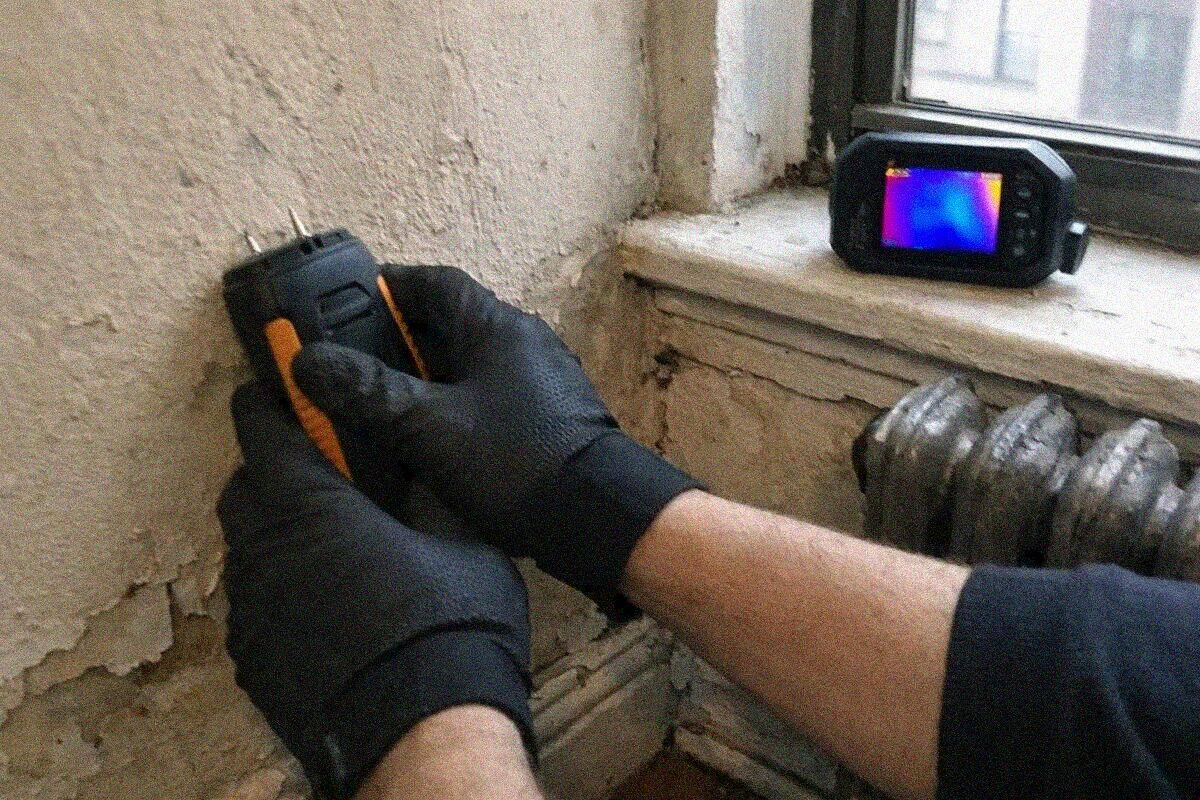
A ceiling that has dried on its own after a leak is often still wet in the lath and the joist pocket, and a stain that looks old can sit over a cavity that never dried. The meter and a thermal camera tell the difference from below without opening anything, and the readings decide whether the ceiling is dried in place with air movers directed into an inspection hole or opened for a section repair.
Finding the Source Above
The apartment directly above is the usual suspect and often the wrong one. Water in a ceiling can come from a bathroom two floors up down a riser chase, from a roof drain or parapet in a top-floor apartment, from a facade crack on a windward wall, or from an air-conditioner sleeve that was never sealed. A thermal camera from below shows the shape of the wet area, and the shape tells the story: a circle around a fixture is a plumbing drip, a band along a wall is a riser or a facade, a fan from a corner is a roof or a window.
Getting into the apartment above is a management step, since the crew has no right of entry and neither do you. The super can usually arrange it, and a leak that is active makes the neighbor cooperative fast. Once inside, the source is often a tub overflow, a cracked toilet flange, a shower pan that has failed, or a washing machine hose, and the readings on their floor confirm it.
HO-4, HO-6, the Master Policy and Subrogation
Renters carry an HO-4 policy, co-op and condo owners an HO-6, and the building carries a master policy for the structure and the common elements.
On a ceiling leak the practical advice from most managing agents is to file first on your own HO-4 or HO-6 for your belongings and your finishes, and let the building's master policy cover the plaster, the structure and the common areas. If the leak was the upstairs resident's fault, your carrier or the building's carrier can pursue that resident's policy through subrogation, which means the insurer that paid steps into your shoes to recover from whoever caused the loss. The carriers sort that out between themselves, and what each one pays depends on the policies and on the cause.
What the carriers ask for is the same on every side: photographs of the damage, the written scope from whoever attended, the moisture log with dates, and any invoice for the drying. A ceiling that is dried and documented is a clean claim. A ceiling that was left, painted over and then found moldy behind the paint is the kind of claim that gets argued.
Building Logistics for a Ceiling Job
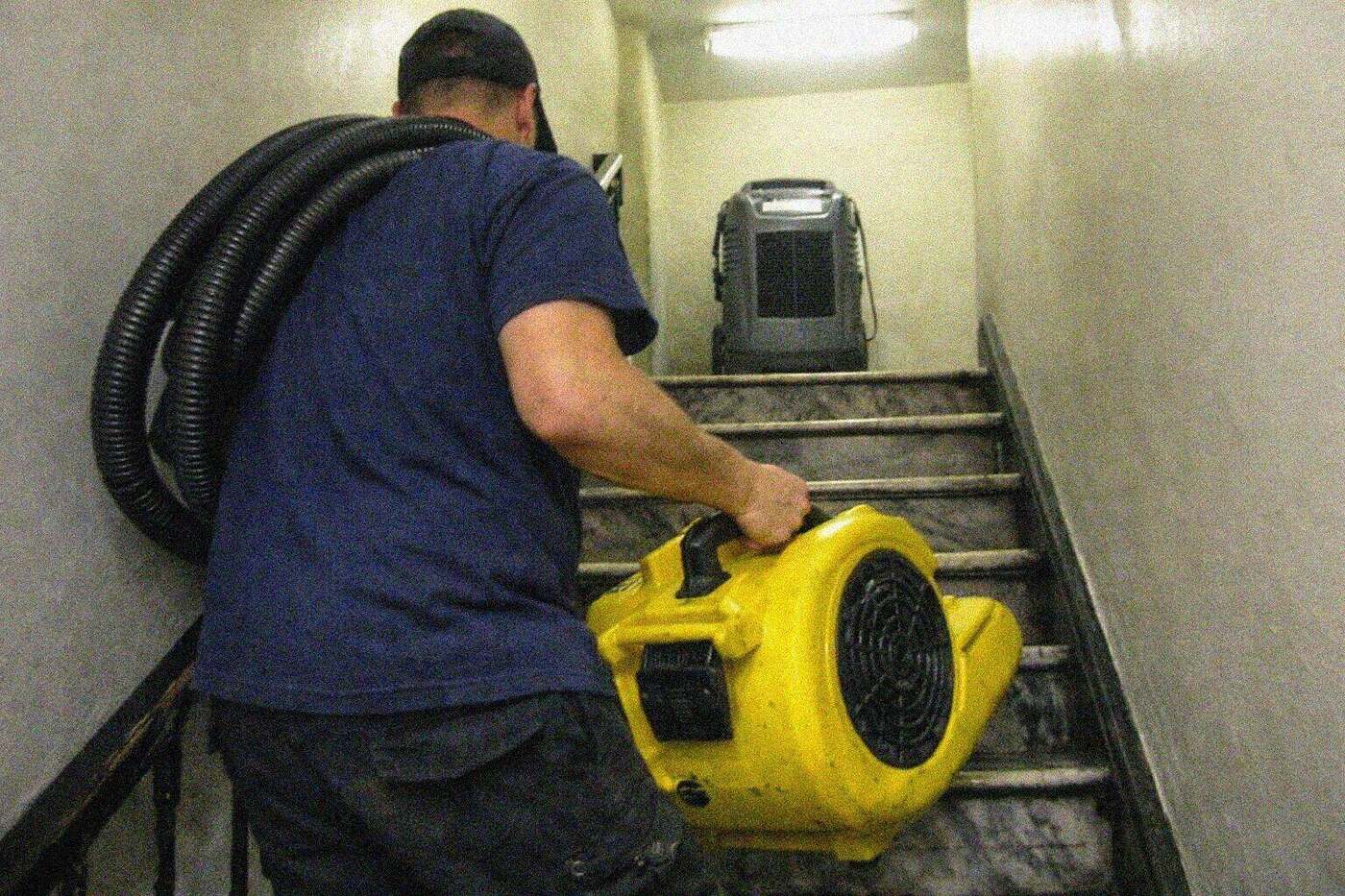
Drying a ceiling from below needs air movers and a dehumidifier in your apartment, and often an inspection hole so air can reach the joist pocket. Drying the floor above needs access to the neighbor's apartment, which the super arranges and management approves, and the contractor we dispatch sends its certificate of insurance and an access plan to the managing agent before the equipment comes through the lobby. In a doorman building the freight elevator hours decide when the equipment can move; in a walk-up it comes up the stairs by hand.
When a plaster section has to come down, the debris is bagged in the apartment under containment and taken out through the route the super agrees, which is usually the freight car or the service stair at a set time. Tell the super the crew is coming and the whole thing goes faster.
What Drives the Cost of Ceiling Leak Damage in NYC
Angi and HomeGuide's 2026 national cost surveys put water mitigation between $3.75 and $7.50 per square foot, and a plaster ceiling in a New York apartment sits at the top of that range or above it.
Clean water from a tub or a supply line is the low end of the range, gray water from a dishwasher or a washing machine the middle, and a toilet overflow from above is contaminated water with removal rules of its own. The mitigation figure covers the metering, the draining and drying of the ceiling, the equipment and the daily readings; taking down and replastering a section is reconstruction, and on a pre-war ceiling that is often the larger figure.
The drivers on a ceiling job are the construction of the ceiling, how long the leak ran before it was found, whether the apartment above is also wet, and whether the plaster has to come down under lead-safe containment. A drip caught the same day over drywall is a small job. A slow leak that ran for weeks over plaster and lath in a top-floor apartment, with a roof or facade source that has to be traced, is a large one and often involves the building's contractor for the source repair.
The scope from whoever attends the property lists the ceiling area, the equipment and the expected drying days, and separates the mitigation from any plaster repair so you and the board can see which side of the paragraph 18 line each item falls on.
Signs a Ceiling Leak Needs Drying Today
A wet ceiling gives warnings in a set order, and the later ones mean the plaster is about to come down.
A stain that is darker in the middle than at the edge
A stain with a wet center has an active source. A stain that is uniformly brown and dry to the meter is old, though the cavity behind it may still be wet.
Paint blistering or peeling in a patch
Water behind the paint film lifts it off the plaster. The blister marks where the water is arriving.
A drip from a light fixture or a ceiling fan
Water finds the wire hole first. Switch the circuit off at the panel before touching the fixture.
A bulge or sag you can see from across the room
A plaster reservoir. Stay out from under it and clear the floor beneath.
Cracks radiating from the wet area
The keys holding the plaster to the lath are letting go. The section is close to falling.
A musty smell with no visible stain
A ceiling that was wet weeks ago and dried at the surface only. The US EPA puts mold growth at 24 to 48 hours on wet material, and the cavity has had longer than that.
How a Ceiling Leak Call Runs in New York
Stop the source through the super
Whoever answers asks whether the super has been reached and whether the apartment above is known. Getting the water shut off upstairs is the first job, and the building holds the key to it.
Access and the COI
The contractor we dispatch sends the certificate of insurance and an access plan to the managing agent, and the super arranges entry to the apartment above where it is needed.
Meter and drain
The ceiling is metered and scanned from below to find the true wet area and the source direction. A growing bulge is drained into a bucket before it fails.
Dry the assembly
Air movers and a dehumidifier go into your apartment, with an inspection hole into the joist pocket if the lath is wet, and the floor above is dried where the readings call for it.
Log, then repair
Daily readings continue until the plaster and joists read dry, and the plaster repair is scoped in writing, separated from the mitigation so the board and the carriers can see who owes which part.
Water in the Apartment Right Now?
Tell us what has happened and where, and we will get the response moving. If water is still coming in, find the shutoff or call the super first.
The phone is picked up 24 hours a day, seven days a week, on every holiday in the year.
Why New Yorkers Call This Number
The Rental, Co-op and Condo Rules in Plain Words
Warranty of habitability for tenants, paragraph 18 of the proprietary lease for shareholders, the declaration for condo owners. The scope is written by unit and by responsibility so the board and both carriers can use it.
Lead-Safe Plaster Work
A ceiling that has to come down in a pre-1978 apartment is taken down under containment by contractors who are EPA Lead-Safe Certified, which the rule requires for more than half of the city's housing.
Readings Before the Evidence Dries
The wet area in a ceiling shrinks from the outside in and a stain lies about its extent. The moisture log from the first visit is what the HPD inspector, the board and the carriers will see.
A typical ceiling leak call in Jackson Heights
The situation: a shareholder on the third floor of a garden co-op off 37th Avenue notices a stain over the bathroom door that grows across a weekend. The apartment above says its bathroom is fine. The super finds nothing under the fourth-floor sink and the board says it will look into it.
What gets done: the contractor we dispatch sends its certificate of insurance to the managing agent and meters the third-floor ceiling from below. The thermal camera shows a band along the party wall rather than a circle around a fixture, which points at the riser chase. With the super, the crew gets into the fifth-floor apartment, where a shower pan has failed and has been leaking into the chase past the fourth floor for weeks. Air movers and a dehumidifier go into the third-floor bathroom and hallway with an inspection hole into the joist pocket, and the fifth-floor bathroom floor is dried while the board arranges a plumber for the pan.
The result: the third-floor ceiling dries in place over the following ten days on daily readings, a small plaster patch at the inspection hole is scoped as building work under the proprietary lease, and the board has a moisture log covering three apartments and a source finding it can hand to the fifth-floor shareholder's HO-6 carrier.
Before you let anyone open a wall
A short checklist for hiring a water damage contractor in New York City: the licenses to look up, the warning signs, and the four documents to ask for on any job.
Questions New Yorkers Ask
How soon can someone look at my ceiling?
The line is answered 24 hours a day, every day of the year, and dispatch starts on the call. How soon the crew arrives depends on the borough, the hour and the traffic, and the honest answer is that nobody will name a time. If the ceiling is bulging, stay out from under it and switch off the circuit for any dripping fixture while you wait.
The apartment above says the leak is not theirs. What now?
They may be right, since water in a ceiling often comes from a riser chase, a roof or a facade above the apartment directly overhead. A thermal scan from below shows the direction the water is arriving from, and that finding usually settles it. The super and the managing agent arrange access to whichever apartment the readings point at.
My landlord is ignoring the leak. Can I call 311?
Yes. Report to the super in writing first, then call 311 to open an HPD complaint. If the building does not resolve it, an inspector can issue a violation, commonly Class B for a substantial leak with 30 days to correct. In a building of three or more units a leak violation also triggers a mold inspection under Local Law 55.
Should I poke a hole in the bulge to drain it?
It relieves the weight, which is why the crew does it, and it can save the ceiling. Doing it yourself carries the risk that the whole section comes down on you, and in a pre-1978 building the plaster dust is treated as lead-safe work. If you must, use a small screwdriver at the lowest point of the bulge with a bucket underneath and stand to one side.
Will my renters insurance cover a leak from upstairs?
An HO-4 policy generally covers your belongings and can cover the finishes you own, and the carrier may then recover from the upstairs resident or the building through subrogation. The building's master policy covers the plaster and the structure. The cause and the policy wording decide, and the scope and moisture log from the first visit are what both carriers will ask for.
Can the ceiling be dried without taking it down?
Often, if the plaster keys are still holding and the lath reads wet but sound. Air movers directed into a small inspection hole dry the joist pocket from below. Where the keys have broken and the plaster has sagged, the section comes down and is replastered once the assembly reads dry.
Related Services
Apartment and Co-op Water Damage
Leaks that cross unit lines, and sorting out who is responsible for what under a proprietary lease or condo bylaws.
Read more →Moisture Detection and Leak Location
Meters and thermal imaging to find where the water went inside plaster, lath and shared walls.
Read more →Water Damage Repairs and Reconstruction
Plaster, drywall, skim coat, paint, trim and flooring, with the handoff from drying to rebuild agreed in writing.
Read more →All 14 services are listed on the services page. How the process runs end to end is on the home page, and the about page explains what to expect from whoever attends.